Tuesday, November 3, 2015

This German store that is a cross between Walmart and Trader Joe's is planning to take over America

LidlReutersLidl has taken over Europe, and its next target for expansion is the US.
A highly competitive German grocery store called Lidl has taken over Europe, and now it's planning to target the US.
Lidl, which will start opening stores in the US in 2018, is like a cross between Walmart and Trader Joe's.
The chain offers deep discounts on groceries, household appliances, clothes, and furniture.
As Lidl expands into the US, "grocery retailers should definitely be concerned, especially those who are currently struggling or whose stores are more conventional," Mike Paglia, director of retail insights for Kantar Retail, told Business Insider.
Walmart should be the most concerned, Paglia said.
"Walmart's Neighborhood Market could feel the greatest pressure of all, as Lidl stores will be of similar size, highly price competitive, and highly fine tuned to offer a relevant, convenient store experience," Paglia said.
Other retailers that will be particularly challenged by Lidl include Food Lion, Bi-Lo, Winn Dixie, and dollar stores such as Dollar General and Family Dollar, he said.
Many US retailers will be forced to lower their prices as Lidl expands, according to Neil Saunders, CEO of the retail consulting firm Conlumino.
"Lidl will provide a challenge — it will result in a number of retailers needing to reduce prices to stay competitive," Saunders told Business Insider.

Lidl and its rival discounter Aldi have upended the grocery market in the UK, forcing the nation's largest supermarkets to dramatically cut prices and lay off workers to stay competitive.
Lidl's sales soared 16% in the three months that ended September 13, according to Kantar Worldpanel.
Meanwhile, sales dropped for the period at Tesco, Morrisons, and Asda, three of the UK's biggest supermarkets, the firm said.
The CEO of Asda, the UK's second-largest grocery chain, has called the new competitive environment created by Aldi and Lidl "the worst storm in retail history."
"When we set the plan, I don't think anyone anticipated the market being in meltdown," Asda CEO Andy Clarke said in August after the Walmart-owned company reported its worst-ever quarterly sales drop.
LidlReuters
Lidl is planning to open its first stores in the US in 2018. The chain has already broken ground on a US distribution facility and headquarters in Virginia, which will cost about $200 million combined, and it has staked out four possible store locations in the Richmond, Virginia, area.
"Lidl will have a unique offering that is unlike anything else in the market," Lidl US spokesman John Froman told Business Insider. "Lidl will offer customers the highest-quality products at the lowest possible prices in convenient locations."
The chain, which has 10,000 stores in 26 European countries, is expected to generate about $84 billion in sales in Europe in 2015, according to Kantar Retail.
Lidl has become a threat to the grocery industry because of its insanely cheap prices and emphasis on fresh food.
"Their stores are small, easy to shop, well located, and emphasize key categories such as fresh produce and prepared foods," Paglia said. "An offer like that is well aligned to what shoppers want these days; the appeal of the traditional big-box store with overwhelming choice designed around the weekly stock-up trip has been waning for several years."
Like its rival Aldi, Lidl keeps prices low by limiting inventory to a lean selection of private-label items, versus traditional supermarkets that tend to carry several different brands of a single product.
Lidl also invests far less in customer service and merchandising than traditional grocers.
Most of the store's products are displayed in their shipping cartons to make restocking quick and easy. That means fewer workers are needed on the sales floor.

Lidl additionally saves money by requiring customers to bring their own shopping bags and bag their own groceries.
But Lidl is more than just a discount grocery store.
The chain also offers appliances and furniture, and last year it made its first foray into fashion.

LidlFacebook/Lidl UK
It debuted a women's collection in August 2014 that sold out within the first three days. The collection included a faux leather jacket costing 14.99 euros and chiffon blouses.
Since then, the retailer has launched a men's collection, a line of handbags, and a fitness brand.
Froman didn't provide specifics on what the US stores would offer.
"We have not announced our full product assortment," he said. "However, our markets will offer fresh meat, produce and bakery items, as well as a wide selection of household goods. We will carry Lidl's own premium quality brands as well as familiar branded goods, available at the lowest possible prices."
LidlFacebook/Lidl UK
Lidl is known in Europe as a "rule breaker who is willing to try new things," and the chain tailors every one of its stores to the local market, Paglia said.
The stores in the US will most likely be about 33,000 square feet, or about one-fifth the size of an average Walmart supercenter, according to Paglia's estimates.
"Lidl has ton a tremendous amount of market research in the US already, has been hiring local talent, and its ability to localize its offer will be a huge asset in a market as fragmented as the US," he said.
Lidl and Aldi still have a small share of the UK grocery market — about 4.2% and 5.6% respectively — but their share of the market is growing and forcing traditional supermarkets into a crippling price war.
Lidl is expected to generate about $84 billion in sales in Europe in 2015, according to Kantar Retail.
It remains to be seen how the expansion of these discounters will affect American grocers.
But if Aldi's success in the US so far is any indication, then Lidl will most likely thrive, Saunders said.
The two brands are very similar and "they have grown hand-in-hand in the UK," Saunders said.
Aldi recently revealed plans to open roughly 600 stores in the US over the next three years as part of a $3 billion expansion, bringing its total number of stores to 2,000.

Sunday, November 1, 2015

That's a lot of coffee: Starbucks sales set to break $20 billion in 2016; more expansion on tap


Buoyed by the launch of new menu offerings and increases in store traffic, Starbucks Corp. brewed up another strong quarter, with revenue and profits meeting Wall Street expectations. The coffee giant also continues to set a torrid pace for store expansion.

Starbucks intends to open 1,800 new stores globally during fiscal 2016, with licensing driving a large portion of the growth. This includes 700 stores in the Americas (half licensed), 900 in China/Asia-Pacific (two-thirds licensed), and 200 primarily licensed stores in Europe/Middle East/Africa (EMEA).
 
In the fourth quarter, Starbucks' net earnings rose 11% to $652.5 million from $587.9 million, with lower income taxes helping to offset a reduction in pretax income. Total net revenues climbed 17% to $4.91 billion, from $4.18 billion. Consolidated same-store sales growth of 8%, including better-than-expected 9% same-store sales growth in the U.S., helped boost revenues.

Looking to 2016, the company said it expects full year consolidated revenue growth of 10%+ on a 52 week basis, with the 53rd week expected to add approximately 2%, which would bring it past the $20 billion mark.

In addition, mobile order and pay functionality expanded to all U.S. sores during the quarter and became available on Android devices through the Starbucks app.

“Starbucks record fourth quarter financial results demonstrate the strength and relevance of the Starbucks brand around the world,” said Howard Schultz, Starbucks chairman and CEO. “And our results underscore the success of the investments we continue to make in our people and business, in new beverage and food innovation and in groundbreaking technology innovation that is deepening our connection to customers everywhere.”
 
During the full fiscal year, net earnings rose 33% to $2.76 billion, from $1.07 billion.

Consolidated net revenues increased 17% to $19.16 billion, from $16.45 billion. Consolidated and U.S. same-store sales both increased 7%.

Science, History, and Real-World Use Support Safety of Reusable Packaging

OPINION
Reusable containers for the transport packaging of food have been used around the world for generations. Billions of reusable packaging products are used each year in North America alone to safely transport fresh and nutritious foods from farms to consumers, and there has never been an identified or detected risk to food safety as a result of their use.
More growers, retailers, and other users in the food supply chain are adopting reusable transport packaging because it provides superior performance and product protection, lower supply chain systems cost, and reduced environmental impact, among other benefits. This growth in user preference makes companies competing against reusable containers concerned over lost business. In response, a corrugated packaging interest group recently funded and published a report asserting that reusable containers pose a heightened risk to food safety compared to their own single-use products.
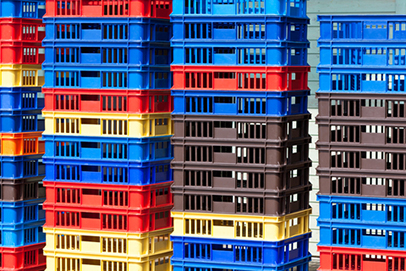
Reusable plastic containersFirst, it must be emphasized that there has never been a documented food safety issue from the actual reuse of commercial containers. Milk crates, bread trays, and containers of various material types for agricultural commodities, for example, have been safely used over and over again in food production and supply. This longstanding record for food safety should not be ignored.
Second, the reusable packaging industry follows rigorous cleaning and testing protocols and deploys advanced industrial washing operations that meet or exceed government standards. Earlier this year, our organization further strengthened the industry’s safety practices by issuing common standards for the effective cleaning, testing, and handling of reusable packaging for food applications. The guidelines were developed in collaboration with growers, retailers, and leading industry food safety experts, and they follow Good Manufacturing Practices (GMPs) and Hazard Analysis Critical Control Points (HACCPs), which are the cornerstone of all modern food safety systems.
Third, industry food safety professionals working with farmers and retailers are actively engaged in their packaging choices and performance to ensure that their products for sale meet the highest quality standards. It is important to recognize that the food safety experts who perform extensive inspections and safeguard their food supply chains every day also believe in the safe use of reusable transport packaging.
The recent efforts to cast doubt on the safety of reusable packaging for food are not based on the historic body of evidence or an actual occurrence in commercial use environments. Rather, the information cited is based on laboratory experiments measuring subjective and hypothetical scenarios, and the experimental results are being mischaracterized in public channels for competitive gain. Matters of food safety should neither be manipulated nor competitive, and the creation of false choices in the marketing of products should not be an acceptable practice.
One example of the misleading translation from laboratory to commercial environments is the cleaning method. The report cites the ineffective use of sanitizers to remove harmful bacteria. The report, and presumably the study, does not take into account that commercial cleaning operations involve multifaceted steps and techniques in preparing a container for reuse. Factors such as heat, detergents and water pressure, and the time and sequence in which they occur, play a critical role in cleaning, in addition to the use of proven sanitizers for killing microbes and biofilms. According to a Food Safety Magazine article entitled, “Biofilms: Forming a Defense Strategy for the Food Plant,” “Removal of biofilms is achieved by a combination of four factors: 1) formulations and concentrations of cleaning and sanitizing agents; 2) exposure time; 3) temperature; and 4) mechanical activity.” Therefore, the corrugated lab’s use of only a sanitizer to eradicate existing microbes to acceptable levels is incomplete research when drawing conclusions about the effectiveness of the entire commercial cleaning operation.
Food safety is not a choice. And attempts to increase public anxiety without proper cause is a lose-lose proposition for all in the food industry. The Reusable Packaging Association (RPA) would be glad to work with partners and other interested parties to ensure that the best and most representative science is performed and available to evaluate and verify food safety in all areas involving transport packaging, for both multi-use and single-use containers.
RPA stands by the industry’s proven safety record, the stringent measures for cleaning reusable products, and the extensive data collected every day that validates reusable packaging’s safe use for food applications. To read RPA’s sanitation guidelines, visit our website.

Why the U.S. Government Might Be About to Tax Your Soda

It could be the answer to several problems.
IMAGE: Getty Images
A handful of cash-strapped states have been eyeing your Big Gulp as a new tax revenue elixir. Can a nationwide soda tax be far off?
The obesity epidemic has reached crisis levels. More than one-third of U.S. adults are obese, with obesity-related conditions, such as heart disease, stroke, Type 2 diabetes, and certain types of cancer, emerging as some of the leading causes of preventable death.
These preventable, chronic conditions have overloaded the American health care system, with costs related to obesity now estimated at between $147 billion and $210 billion per year. With the stakes this high, uncovering the lifestyle links to these issues and attempting to curb their impact is a major challenge for public health officials.
Enter the soda tax.
The American Heart Association lists soft drinks and sugar-sweetened beverages as the largest contributors of added sugars to Americans' diets. Increasingly, government officials around the country are looking at taxing these beverages to create a disincentive to consumption, and, ultimately, to generate revenue to offset the higher health care costs that come along with obesity.
As of January 2014, 34 states (plus Washington, D.C.) apply a small sales tax to sugar-sweetened soda sold in stores, and 39 states and D.C. apply tax to sugary soda sold in vending machines. In the fall of 2014, Berkeley, California became the first city in the U.S. to pass a larger tax on sugar-sweetened beverages, where these drinks are now subject to a one-cent-per-ounce tax.
And it's not just the United States that is getting into the game. Last year, Mexico--which is the only country with an obesity rate higher than the U.S.--put a nationwide, one-peso-per-liter tax on sugary drinks, which raised their price of these drinks by roughly 10 percent. As a result, sales on sugar-sweetened beverages dropped about six percent over the course of one year.
I recently spoke with Kelly Brownell, who is the dean of Duke University's Sanford School of Public Policy, and is a leading authority on public policies to enhance nutrition and combat obesity. He told me that, thanks in large part to the successful case studies in Berkeley and Mexico, momentum is building, and there is certainly potential for a national soda tax in the U.S.
"Estimates are that a tax of 20 percent will result in 15-to-20 percent reduction in consumption, which would be one step forward in a number of things that must be done to address obesity," Brownell says.
That certainly sounds like it would put a significant dent in the obesity problem, while raising much-needed funds to boot. But we all remember what happened when New York City enacted their large container ban on sugar substances. Without rehashing the gory details, let's just call it a failure. But Brownell says that failure shouldn't be held against the idea of a soda tax.
"There were several unfortunate circumstances that made it an uphill battle for New York City," he says. "Unfortunately, because of state law, the city has jurisdiction in a small number of venues, like movie theaters, restaurants, and food carts. The law was considered arbitrary by the courts in part because container size might be restricted in a movie theater but not in the convenience store next door."
The good news, Brownell says, is that there is tremendous momentum building. France, Mexico, Romania, and others have similar taxes. And Brownell himself admits that he was surprised by the significant impact the tax in Mexico had, considering its relatively low, 10 percent threshold. What kind of impact could, say, a 20 percent tax in the U.S. have?
"When I was at Yale, we developed Rudd Center Tax Calculator that can show the revenue potential for any area," Brownell explains. "For example, for California alone, the income for the state would be a billion dollars a year."
So what stands in the way of a soda tax? As you might imagine, soda companies, which are highly invested in keeping this fight at bay. Coca-Cola's recent ad campaign to define an "energy balance" is just the latest in the big-dollar investment by soda companies to try to get consumers to rethink giving up their cans and bottles of carbonated calories.
"The beverage industry has said these taxes won't slow consumption, but they have spent tens of millions of dollars to fight the tax from becoming law," Brownell says.
Are we on the precipice of a nationwide soda tax? It's hard to say, but it certainly seems like lawmakers can find lots of reasons why it makes sense to explore it further.

Is the largest natural-foods brand even sold at Whole Foods?

No, claims Kroger, whose Simple Truth and other organics lines are rising to a scale that challenges Whole Foods for supremacy.

If there’s any lingering doubt that natural and organic food is not just for hippies and foodies, take a gander at this number that supermarket giant Kroger  KR 0.40%  released for the first time yesterday: $11 billion.
That’s the amount that natural and organic products account for in Kroger’s sales over the past 12 months. Using the company’s $108 billion in revenue in its fiscal 2014 as a benchmark, that’s about 10% of the company’s business.
For context, Whole Foods Market  WFM -0.63%  had a total of $14 billion in sales in its last fiscal year, while Costco  COST -0.10%  has said that its annual sales of just organic products are about $4 billion.
Kroger executive vice president of merchandising Mike Donnelly, who announced the figure during the company’s investor conference, tellsFortune that the category has experienced double-digit growth over the last five years.
 
“Millennials are driving this whole department category,” Donnelly says.
Kroger, which is one of the most analytics-savvy supermarket chains, started to see the shift toward natural and organic in its sales data four years ago. The insight led executives to build Kroger’s own brand, called Simple Truth, in the category.
Since launching three years ago, Simple Truth has grown at a double-digit rate and is expected to reach $1.5 billion in annual sales by the end of the year. Kroger CFO Michael Schlotman said at a BMO Markets conference that the company believes Simple Truth is the largest natural food brand in the U.S.
Bienvenue, Québécois: Roundy's partners with Canadian province to supply Mariano's
Oct 30, 2015, 11:13am CDT
INDUSTRIES & TAGS
Alison BauterReporterMilwaukee Business Journal
Milwaukee grocery chain Roundy's Inc. is partnering with Québec to bring branded and private-label food and drink from Canada's largest province to its Chicagoland Mariano's Fresh Market stores in 2016.
Québec Premier Philippe Couillard joined with Roundy's chairman, president and CEO Bob Mariano Friday at the company's freshly opened NewCity Mariano' store in Chicago Friday to announce the partnership.Milwaukee-based Roundy's Inc. will partner with Québec for specialty, imported foods. 
Milwaukee-based Roundy's Inc. will partner with Québec for specialty, imported foods.
DAVID SCHUYLER
The deal will expand Mariano's international product offerings, where the hallmark so far has been its "Italian table" partnership. According to a Roundy's press release, Québec specialties include game meats and fowl such as caribou, quail and bison; more than 300 kinds of artisanal cheeses; maple products; and apple ice wine, although it's unclear which of those will be sold at Mariano's stores.

On Nov. 18, the province will showcase its products at Roundy's corporate headquarters in Milwaukee, where more than 25 Québécois will showcase their companies' products as part of the Private Label Manufacturers’ Association trade show. Roundy's buyers, likewise, will attend a trade show in Montreal next April, and also visit the Gaspé and North Shore in May to learn about Québec’s fisheries and seafood specialties. Another potential outcome is a "Foods of Québec” event at Mariano’s stores, the company said.

In Wisconsin, Roundy's (NYSE: RNDY) operates the Metro Market, Copps and Pick ’n Save grocery stores, many of which will eventually see the products and programs originally piloted at Mariano's stores.