Wednesday, May 2, 2018


Ocado is embarking on a new partnership in which it will supply its online shopping and delivery technology to Swedish retailer ICA.

FOOD & DRINK

Ocado signs new partnership with Sweden's ICA

With around 1,300 stores across Sweden, ICA has a market share of around 36% and generated sales of SEK 106.5 billion in 2017.
The deal will see Ocado partner exclusively in Sweden with ICA to help the business launch an end-to-end solution for online grocery services. This will include front-end web site functionality supported by Ocado's proprietary 'web shop' and mobile grocery ordering applications, construction of Ocado's latest generation warehouse, and last-mile routing management technology.
Click here
In working with ICA, Ocado said it will be adapting its model to suit the needs of a different business model based on retailer-owned stores that will enable the independent retailers to continue to compete. The platform is expected to be implemented by the end of 2020.
Luke Jensen, chief executive of Ocado Solutions, said: "We are excited and proud to be partnering with another of Europe's leading grocery retailers. ICA has a strong track record of growth and innovation and our Smart Platform will give the ICA-retailers the opportunity to provide their customers with new levels of service, convenience and value. Our flexible, scalable and modular solution is uniquely positioned to address a fresh set of challenges and allow ICA deliver its ambitions for online."
ICA and Ocado will develop their first customer fulfilment centre as part of the partnership in the Stockholm area. The build is expected to take approximately three years. ICA will also move its store-pick based operations to the Ocado Smart Platform.  
In consideration of the investments made by Ocado, including maintenance and access to technology, ICA will pay Ocado certain upfront fees on signing the deal and during the development phase. Then there will be ongoing fees linked to both sales achieved and installed capacity within the customer fulfilment centre and service criteria.
Per Strömberg, chief executive of ICA Group, said: "We are now laying the foundation for the next generation ecommerce offering, and we are putting an important piece of the puzzle in place to realise our digital ambitions for all of ICA Group. Today we have the industry's most efficient processes for physical shopping, and through this agreement we can create the most efficient solutions also for ecommerce."
Ocado has also recently signed up France’s Groupe Casino and Canadian chain Sobeys.
A fully automated storage, handling and order processing system supplied to US grocery retail giant, The Kroger Co., has secured the benefits of enhanced product freshness, increased efficiency, reduced errors, lower costs and full product traceability.
A robotic handling solution from Cimcorp processes orders fully automatically at Kroger’s Mountain View Foods dairy production facility in Denver, Colorado, fulfilling Kroger’s objectives of faster picking, higher accuracy and greater reliability.
Kroger built the new facility in Denver – its first new fluid milk plant in more than 20 years – in 2014 in order to deliver exceptional quality and freshness to its customers. As well as meeting the company’s environmental requirements in terms of zero-waste-to-landfill and energy efficiency, the new facility had to fulfil Kroger’s objective of minimizing exposure to work-related strain for its employees. Instead of installing a traditional in-floor ‘drag-chain’ style conveyor – which requires workers to use long-handled hooks to pull 250lb (113kg) stacks of dairy cases onto the system – Kroger opted for Cimcorp’s solution, based on robots that operate from overhead gantries.
Cimcorp designed an end-to-end automated warehouse solution for the Denver site, with cases of product picked according to Kroger’s specified sequence at one end of the facility and then palletized for loading into delivery trucks at the other – allowing for significant storage buffering in between. The heart of the solution is Cimcorp’s MultiPick, a robotic storage, handling and order processing system. With four robots operating from overhead gantries, the MultiPick system at Kroger can store up to 36,000 crates and is able to pick 32,000 crates daily. The 215,000- square-foot (almost 20,000m2) Mountain View Foods plant processes fresh conventional and organic milk in half-gallon and gallon containers, as well as packaging aseptically processed milk, creams and juices in quart-sized and smaller bottles. The MultiPick robots handle the products in plastic dairy crates – either singly or in stacks – moving the inventory to storage positions on the floor until required for order fulfilment. Orders are then picked by the robots, palletized and banded before being loaded into delivery vehicles.
Cimcorp’s scope of supply also included case stackers, manual infeed stations and inbound and outbound conveyor systems. All the hardware is seamlessly integrated with the complete suite of software needed to operate the facility and is controlled and monitored through Cimcorp’s warehouse management system (WMS). The WMS also controls order processing, gantry movements, stack transport and storage facility data, while the ControlLogix PLC manages the conveyors, stacking equipment, palletizer and strapping system.
Additionally, Cimcorp ensured interplatform communications and messaging to oversee the entire system and inventory reporting. Cimcorp’s robotic solution means faster material handling, resulting in shorter lead times, longer shelf life and maximum product freshness. Other benefits include precise control of the entire material flow, enhanced order accuracy, flexible use of space, easy cleaning and labour savings. The solution also enables the collection of vast amounts of data to help in the analysis of dispatch operations and production planning, as well as providing Kroger with 100% traceability, a crucial factor in the perishable products sector.
Other brands in the food and beverage industry worldwide benefitting from Cimcorp’s robotic automation include Arla, Colruyt, Eroski, Fazer, Grupo Bimbo, Martin’s Famous Pastry Shoppe, Mercadona, Nortura, Olvi, Sinebrychoff (Carlsberg), The Glenmore Distillery, Tuko Logistics Cooperative and Valio.

Farm Boy’s Jeff York talks automation and real estate at RCC event

Customer service a key focus as the fresh food grocer continues to grow
It’s no secret that Farm Boy has its sights firmly set on growth in 2018 and beyond. With 26 stores already stretching across Ontario, the Ottawa-based fresh food grocer has said it plans to open an additional 12 to 15 locations in the province over the next three years. Despite the grocery industry grappling with increased labour costs, changing consumer habits and the rise of Amazon, Farm Boy continues to thrive.
exterior-farm-boy-hamilton-copyFarm Boy’s co-CEO Jeff York shared some of the secrets to the company’s success with Michael LeBlanc, senior retail advisor for the Retail Council of Canada, during a keynote session at the organization’s Retail Marketing Conference in Toronto earlier this month. Here’s an edited version of their conversation:
Farm Boy is family owned, but it’s private-equity backed. Tell us how that affects the day-to-day and mid-term strategy.
We essentially have unlimited capital to do whatever we want. It’s a nice position to be in. Our biggest challenge is finding locations.
And your locations are interesting. You don’t land yourself in what I would call a conventional high traffic location. Tell me a little about how you choose locations?
People think there’s a ton of retail locations out there that are desirable and the irony is, in Canada, there aren’t a lot of really prime corners left, so the prime locations are going to be prime locations forever and we’re late to the market. When we go to Cambridge, for instance, we look for busy streets and we put a store in and they’ll eventually find us. That’s what we say: Farm Boy is worth finding. It’s a destination.
Do you have an idea of what your trading area is? 
A typical grocery store draws 2 to 3 kilometres.  We draw 8 to 10 kilometres. Again, we’re worth finding. So when you come to a Farm Boy it’s a food experience; you’re not just going wandering aimlessly down the aisles finding products nobody buys anymore. We actually have products that people want.
And you’re in a top-tier mall as well. You’re in the Rideau Centre in Ottawa. 
Yes, [mall owner and operator] Cadillac Fairview had a problem and they don’t usually have problems in their malls. They’re the “A” malls that everyone is trying to get in, and they had a problem corner. We wanted to test the small footprint store [8,000 sq. ft.] so we said, “Why not? we’ll pay you this much rent,” they said yes and we opened the store.
You’re opening up stores in different places and doing a mix between traditional and digital advertising, and then you’re keeping up with changing consumer habits. How do you build a team that can support all that?
You hire great people and you hire curious people, people who want to change, people who want to adapt. Retail is an evolution. If you aren’t on a journey as a retailer, get out of the business because you have to learn in retail every day. I’m not even in my office. I travel all the time and look for ideas, integrating new things, looking at a store and it’s not even food stores all the time. You have to connect with the customer and not on price, because if you’re in the price game right now you’re done, you’re done, you’re done. You can’t make money in the price game unless you’re the biggest. I came from the price game at Giant Tiger. [Farm Boy is] in the value game. What’s your time worth? That’s what I ask people. Then look at what we’re offering. Put a time value on preparing food and then look at the value you get from a Farm Boy.
Retailers are, for one reason or another, experimenting with automation in the store, including self checkout.
Never going to happen at Farm Boy, by the way, ever. You should be thanked when you leave the store and they should smile and they should put it in a bag when you leave. That’s just common courtesy. You’re spending your money. We’re never going to ask you to donate to Farm Boy. We don’t do it. You’re spending your money in our store and we thank you when you leave. We’ll figure out mobile cashes [to deal with long lines at cash.] We’ve designed our newer stores to have four restaurant-only cashes then six for [grocery purchases]. So we’ve adapted our stores, but that’s the evolution of providing great service.

Tuesday, May 1, 2018


Why can't grocery retailers and manufacturers raise prices?

New twists on old ideas defining the future of food

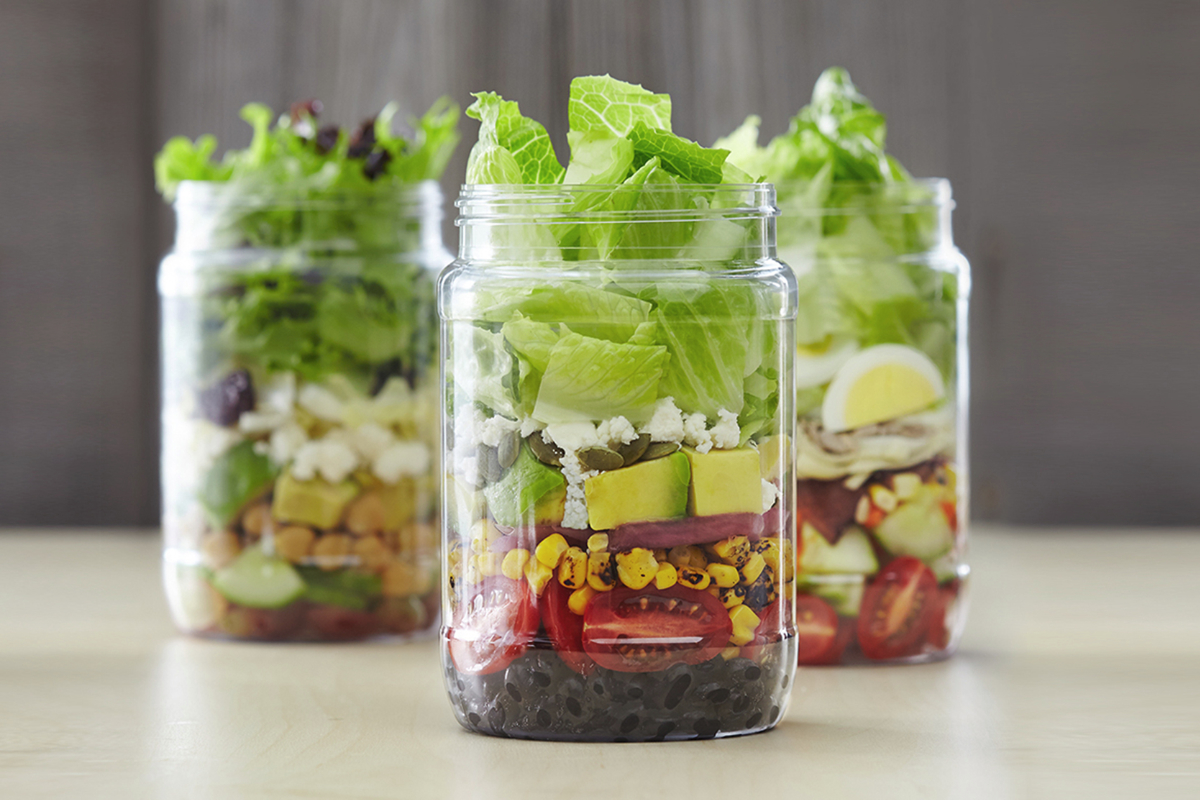
Farmers Fridge salads
Photo: Farmer's Fridge
Donna BerryCHICAGO — Corporate executives, capital investors and financial advisers in the food space gathered on April 19 to hear food and beverage industry experts and entrepreneurs discuss the changing dining landscape and the future of food. The half-day conference was hosted by the Association for Corporate Growth (A.C.G.) Chicago, a network of more than 12,000 decision-making professionals in business development.
“Health and wellness is in everything,” said Lynn Dornblaser, director of innovation and insight, Mintel, Chicago. “But remember taste reigns.
“Our research showed that 62% of U.S. consumers believe the fewer ingredients in a product, the better it is for you. That must mean my favorite food is a health food because it’s made with simply potatoes, oil and salt.”
Ms. Dornblaser’s comments set the stage for a number of innovators to share their stories.
Farmer’s Fridge has been providing Chicagoans better-for-you fresh food through vending machines since 2013. The company recently moved into the Milwaukee market. Founder and chief executive officer Luke Saunders said the idea behind the company is to make fresh food more accessible than a bag of chips or candy bar.
The vending machines are restocked daily with items for breakfast, lunch and dinner, all hand prepared and packaged at a commissary kitchen located in the Fulton Market district of Chicago. All items were developed by a chef and registered dietitian and are constantly changing. Nutrition information is available on the company’s web site and app.
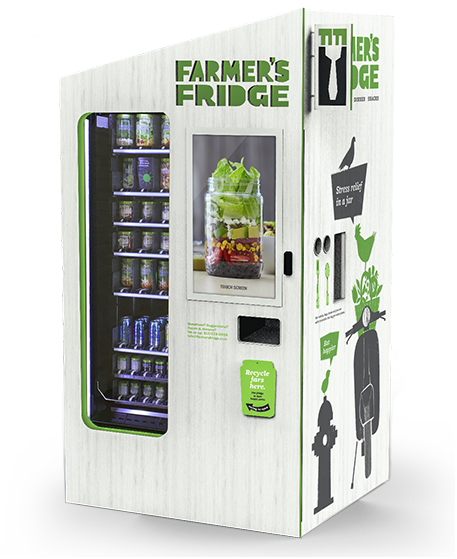
Farmer's Fridge vending machine
Farmer’s Fridge machines use touch-screen technology that works in conjunction with the app. The software lets customers check inventory at nearby machines and customizes rewards based on their purchasing habits. Meals include pasta and rice bowls, salads and sandwiches, some with cheese, eggs, fish or meat, others are vegan. There is also a range of snacks, such as hard-boiled eggs, cheese chunks, diced chicken breast and vegetables with hummus. Sweet and salty treats include trail mix, seasoned nuts and pudding or yogurt parfaits. The machines also carry sparkling waters, kombucha and ready-to-drink lattes. Prices for the salads and meals range from $4 to $12.
“We’ve grown 300% in the past 12 months,” Mr. Saunders said. “Today we are at 125 locations. Next week it might be 135.
“Consumers have 24-7 access to foods they can trust. All the food is currently made in one place, but you have the same experience no matter where you eat it.”
The vending machines feature products with a shelf life of 24 to 48 hours. All unsold items are donated to local food pantries. The company sources organic and local ingredients when possible.
Farmer’s Fridge developed from a need Mr. Saunders identified in the fresh convenience food space while he was a traveling salesman in 2009. He set up his first vending machine in 2013 in a now-closed food court in downtown Chicago, and since has been able to place Farmer’s Fridge machines in Northwestern Memorial Hospital, O’Hare International Airport and other business and residential locations throughout the city.
Rethinking protein
Ken Plasse, c.e.o. of Fishpeople Seafood, Portland, Ore., shared the mission of his company, which was founded in 2012 to “re-imagine North America’s relationship to the sea.” The company’s passion for sustainability is helping restore habitats and peace-of-mind to seafood lovers nationwide.
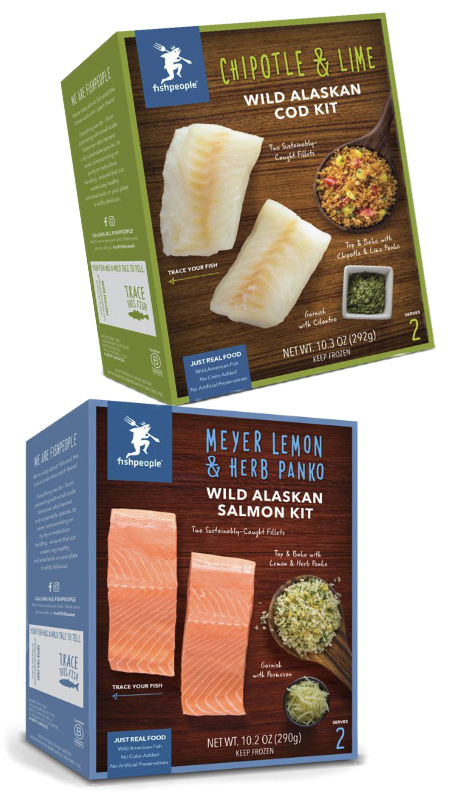
Fishpeople meal kitsAll of Fishpeople’s seafood is responsibly sourced and sustainably caught in the Pacific Northwest by independent fishermen, he said. Packages provide the story of the place where the fish was raised. For more information, consumers may use a tracking code on a package to learn about where the fish came from, how it was caught and the full journey from waters to package.
“That’s right, we’re talking ridiculous transparency,” Mr. Plasse said.
The company recently introduced a line of seafood kits designed to make cooking seafood at home less intimidating. Each kit comes with two fish fillets, a topper and garnish, a moisture lock tray and foil, and step-by-step instructions for foolproof results every time. Dinner is ready in less than 20 minutes.
Seth Goldman, co-founder of Honest Tea and executive chairman of Beyond Meat, El Segundo, Calif., compared the similarities of the “tad sweet” ready-to-drink brewed tea he developed in 1998 and the meat alternatives he currently is involved with.
“It’s the undoing and redoing of food,” he said. “With Beyond Meat, we rebuild the structure of meat from plant materials.
“On a good day, 5% of shoppers are vegan. They shop frozen for their meat alternatives. If we want to build this business, we need to appeal to the 95% of non-vegan shoppers. This is why our products can be found in the refrigerated meat department.”
He explained the merchandising approach was not well received by some vegetarians who feel like shopping the meat department is “like going into Death Valley.”
“Some retailers will dual merchandise,” he said. “But we believe our future is in the meat department.”
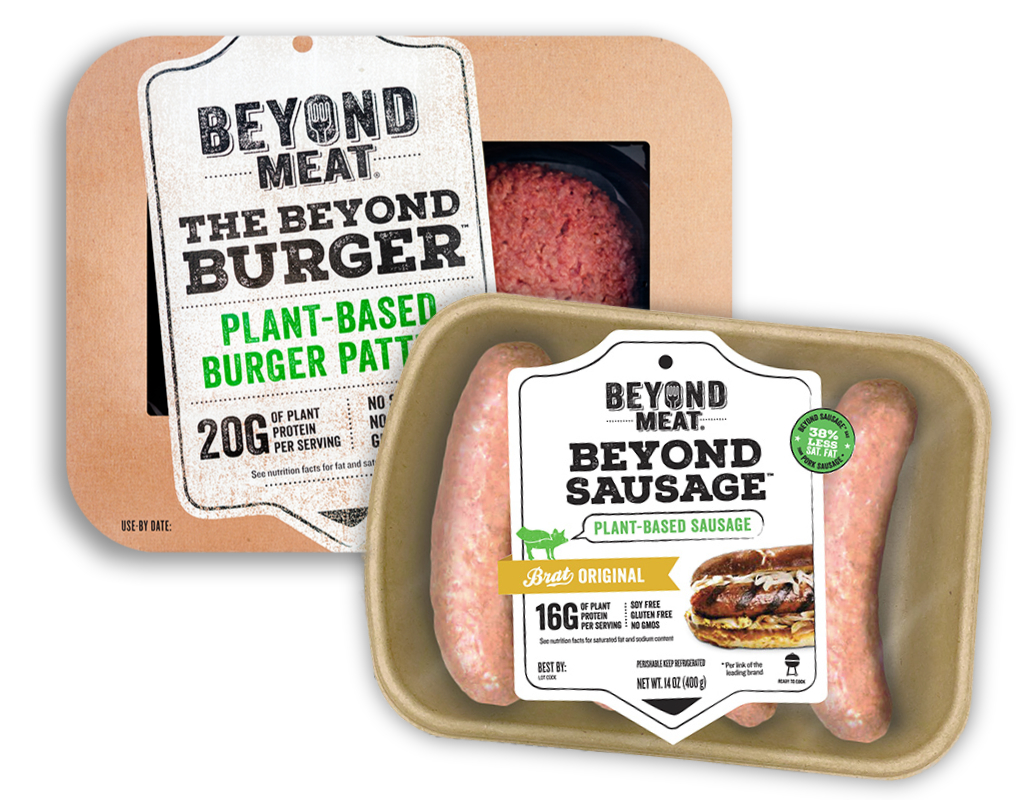
Introduced in 2016, the Beyond Burger looks, cooks and tastes like ground beef but is made from plants, with no bioengineered ingredients, soy or gluten. It is currently sold in more than 5,000 stores and served in nearly 4,000 restaurants, hotels and food service outlets.
Beyond Meat Beyond Burger and Beyond SausageThe company is currently introducing nationwide its new Beyond Sausage, a plant-based alternative that looks and cooks like pork sausage in three varieties: bratwurst, hot Italian and sweet Italian. With more protein and less fat than traditional links, Beyond Sausage is made with pea, fava bean and rice protein with trace amounts of beet for color, coconut oil for juiciness and an algae-based casing. Like the company’s Beyond Burger, Beyond Sausage features a proprietary approach to braiding and binding proteins, fats, minerals and water to recreate the architecture of meat.
In December 2017, Beyond Meat announced the close of a $55 million fundraising round led by Cleveland Avenue, L.L.C., a venture capital firm founded by Don Thompson, former chief executive officer of McDonald’s Corp., with additional investment from Tyson Foods Inc., Chicago. The company said it plans to use the funding to more than triple its production footprint, support research and development and expand sales and distribution.
Another vegan protein player, this one developing seafood alternative, provided attendees a preview of its products, which are slated to enter the market in the first quarter of 2019, upon completion of production facility in Ohio. Good Catch focuses on seafood without sacrifice, said Eric Schnell, co-founder and co-c.e.o.
The Good Catch line will include everything from fish-free tuna and burgers to crab-free cakes, all produced with nutritious, sustainable ingredients.
“The recipes are based on six varieties of beans,” he said.

Picking technologies: When inaccuracy leads to lost customers

Picking technologies: When inaccuracy leads to lost customers
The true cost of a mispick is measured in service levels—and by a dwindling customer base when consumer and B2B buyers turn to sources that get orders right.
Most organizations understand that mispicks can add up to big losses—in money, time, and labor—but the biggest bite comes from losing a customer due to service problems associated with slow deliveries, receipt of the wrong item, and the hassle of a return. In today's fast-shipping world, where two-day (or faster) delivery has become the norm thanks to the likes of Amazon.com and Zappos.com, companies serving both consumers and business-to-business customers must meet higher-than-ever expectation levels or suffer the wrath of a dissatisfied customer.
"Service is now the big issue," says Steve Mulaik, Atlanta-based director with global supply chain management consulting firm Crimson & Co. "[A mispick] can add two days to an order's processing time. This is huge in the cut-throat e-commerce world. This sort of thing ends up in complaints on Facebook and elsewhere that drive [customers] to sites that have better service."
The situation is putting pressure on distribution center leaders to improve accuracy in the picking process. The list of remedies is long and includes technology solutions, process changes, and new approaches to training DC workers. But before a DC can tackle any of that, managers and staff must understand what a mispick is, what it costs, and how to address the weak spots in their operation.
MISPICKS: WHAT THEY ARE AND WHAT THEY'RE COSTING YOU
A mispick occurs when the wrong item or wrong quantity of an item is picked, when an item is omitted, or when a damaged or mislabeled item makes its way into an order. Mispicks occur primarily through human error; a worker picks the wrong item, pulls from the wrong location, picks the wrong quantity or unit of measure, puts an item into the wrong tote, or in some cases abandons the pick task along the way. Mispicks also can occur because of vendor errors or because a product has been misreceived.
Experts say it's tough to put an industry-standard price tag on the cost of a mispick because so many factors come into play, including the value of the product being picked and the costs associated with shipping, returning, and restocking the item—as well as the labor required to handle it all. Soft costs—including resulting inventory inaccuracies and customer dissatisfaction—further muddy the waters.
Despite those challenges, there are some industry statistics that highlight the severity of the problem: A 2012 study by research company Vanson Bourne estimates that DCs lose nearly $400,000 a year due to mispicks, and Crimson & Co. estimates the labor cost of a mispick in cart-picking operations at $3 to $7 per error.
"It's different for every organization," says Peter Gerbitz, system sales manager for Lightning Pick/Matthews Automation Solutions, a Wisconsin-based provider of light-directed and advanced order fulfillment systems. He adds that awareness of the problem is growing, although he says efforts to mitigate it lag. "About half [of organizations] have really drilled in and can put a dollar amount on the cost of a mispick. In the half that haven't done so, they have a general idea of the elements and realize the severity of the issue. And there are a number of them that don't understand the cost associated with it [at all] ... For some reason, they may shy away from the investment needed to correct the problem."
Those reasons often include the high cost of new technology solutions or upgrades, and the time and training involved in developing new picking processes or redesigning existing ones. Gerbitz and others say DC leaders should look past such hurdles to find affordable and creative ways to address the problem. They also point out that, for some firms, a hefty high-tech investment will not only alleviate the pain of mispicks but may also yield game-changing productivity improvements throughout the DC. In either case, improving the picking process can mean the difference between a satisfied and dissastisfied customer base.
"Customers have zero appetite for mispicks and inaccurate orders," says Doug Card, director, systems and special applications, Americas, for Kardex Remstar, a Westbrook, Maine-based manufacturer of automated storage and retrieval systems. "Almost everyone has multiple sources they can get something from, so if you ship someone the wrong product, if it's not a perfect experience, they will go somewhere else."
MITIGATION STRATEGIES: REDUCING ERRORS, IMPROVING ACCURACY
There are three primary ways to mitigate the risk of mispicks: technology, design, and training. Technology is often the first thing that comes to mind, with solutions that range from simple bar-code scanners and radio-frequency identification (RFID) systems to more advanced voice- and light-directed picking technologies. Such solutions rank high because they make an impact.
"The more you automate, the more accuracy you are typically going to see," says Gerbitz. "On the flip side, the more you [automate,] the higher the cost."
As an example of high-tech automation, he points to the light-directed order fulfillment solutions Lightning Pick provides. Pick-to-light technology, as it's commonly known, is an order fulfillment system that uses alphanumeric displays that light up to guide and expedite the manual picking process. Such solutions incorporate other technologies—including bar-code scanning and RFID tools—and are designed to integrate with a company's warehouse management system. But not all companies will benefit from such solutions.
"There are deltas on both ends, where [a company] may not have the order volumes to justify it, and we see that the [return on investment] won't be there. On the other hand, depending on the product, [a company's needs] may be beyond what we can provide," says Gerbitz. "But there is a very large group of customers in between that can benefit from this type of technology."
Outside of automation—and, often, in conjunction with it—experts urge DCs seeking to reduce mispicks to conduct a detailed review of their picking process to identify—and address—areas where errors are most likely to occur and evaluate how well they train and motivate their picking staff to get orders right. These are areas where DCs can get creative—but they must be persistent, Mulaik advises.
"Tuning or redesigning a picking process to produce 0.1-percent errors without outside help can take multiple quarters, if not years, and should start with a thorough review of the kinds of picking mistakes that occur most commonly in the organization," he says, adding that managers should then address those issues one by one.
"It's more about how we deal with [errors] so that they don't happen," he says. "Sometimes, I think people just don't get creative enough."
As an example, he points to a bar-code scanning system that gives the same auditory signal for a pick as it does for a mispick. Simply programming your system to use a different sound for each will help reduce some of the mispicks.
"You need to think through the design process—within your system's capability," he says, adding that developing training programs and creating awareness about how mispicks happen is also a key part of the process.
Card agrees that solid processes are the foundation of any good picking solution.
"[Reducing mispicks requires] a combination of technology, process, and other things," he says. "Implementing new technology like automation can certainly help, but if you don't have good processes and policies around it, you're not going to [achieve] peak accuracy."
People are the other key element in the mix.
"You have to buy into how important the work environment is, because it plays into being able to reach that peak accuracy," Card adds. "Technology is only going to get you part way there."
Training programs for order pickers become an important piece of the equation, especially if a DC is working with system limitations—in most cases, this means a situation in which a system upgrade or replacement is too costly. Mulaik says developing awareness of where problems occur and training workers on how to deal with or work around those problems is vital to improving accuracy. Card adds that managers should reinforce training by rewarding workers for picking accuracy. This can be done creatively—with bonuses, time off, or some other form of recognition.
"[DCs] should look at their overall processes and say, 'How can we incorporate technology?,'" Card says. "But then you have to say, 'Are we doing things the right way? Are people motivated? Are they being rewarded for accuracy?' It's a combination of all that."
Successful integration of these elements helps drive organizations toward the ultimate goal of providing the best possible customer experience.
"Ultimately, it's about service," Mulaik says. "It's not so much about the cost of the mispick itself. Companies get upset about how [inaccuracy] impacts service."

How and Where Consumers Are Using Smart Speakers

The Lempert Report: Amazon Echo is leading the pack, according to several studies
A survey of 1,000 U.S. adults conducted by Voicebot and Rain Agency found that more than a quarter (26%) of smart-speaker owners have made at least one voice purchase and 12% shop by voice every month. 
Another study by Delineate reported that 95% consumers are aware of smart speakers, and found that 25% of consumers without a smart speaker plan to get one.
Chuck Martin wrote on MediaPost that the Rain study found 10% of those without a smart speaker plan to get one this year. That would account for 50% growth in the smart-speaker user base. 
He goes on to delineate that these speakers are placed in many rooms, including the living room (46%), kitchen (41%), bedroom (37%), bathroom (6%), dining room (6%), garage (6%) and work office (3%). 
As with all other smart speaker studies, this one also shows Amazon out in front with its Echo smart-speaker line. So what are people doing with this tool? 
ComScore surveyed consumers and found that just 8% order food, while 14% play games, almost 40% use it as a reminder or to-do list, and 57% check the weather. The No. 1 use? Asking general questions. 
Voicebot reports that there are now over 15,000 skills available on the bot.