Sunday, July 8, 2018

7 customer service lessons from the best Uber driver ever

This Toronto Uber driver has maintained a 4.99 rating after driving nearly 5,000 passengers. When I climbed into his car, I found out why.


7 customer service lessons from the best Uber driver ever

[Photo: Klaus Vedfelt/Getty Images]


I’ve probably taken an Uber two or three times a day for the past couple years. And every time I idly check the driver’s rating and number of rides. I’ve found even pretty high marks usually mean good but not great service. 4.5? Get ready for loud GPS directions. 4.7? Messy trunk with no suitcase room.
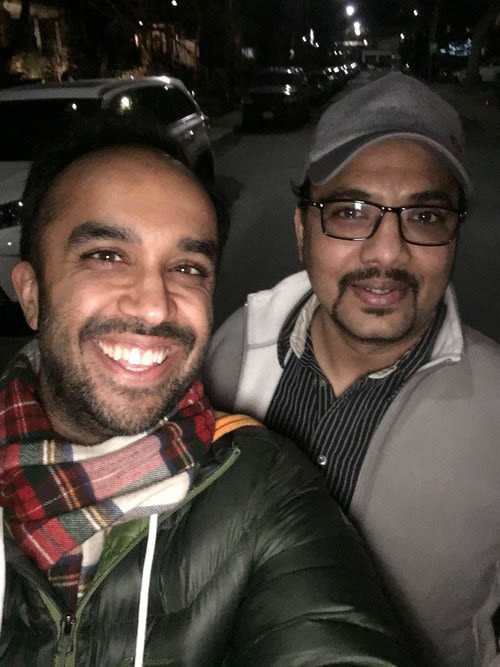
Vishwas Aggrawal [Photo: courtesy of Vishwas Aggrawal]
But something different happened recently. A few months ago I hailed an Uber driven by a guy named Vishwas Aggrawal, who goes by Vish for short. He had a staggering 4.99 rating. 4.99? I couldn’t believe it! I figured he was just a newbie–until I scrolled down and saw that he’d given almost 5,000 rides.
How was that possible?
Well, when I sat down in Vish’s car I realized how it was possible. The five-minute drive home blossomed into an interview I did with Vish the following week (in the back of his Uber, of course) for my podcast 3 Books with Neil Pasricha, where I discuss the three most formative books of inspiring people like Seth GodinJudy Blume, and Gretchen Rubin. Vish was officially the first Uber driver on the show, and he shared with me why he cares so deeply about his service quality–even though Uber has no leaderboard, ranking, or major incentives tied to it–and what he does in order to keep that service so high.

1. MAKE A 10-SECOND OFFER, THEN CONFIRM THE DEAL

After Vish confirms his passenger’s name and destination, he always asks, “Do you have enough room back there?” while actually moving his seat up. Within 10 seconds he’s able to show–not tell–that he’s in the high-service game using a repeatable method to demonstrate this quickly.
After Vish moves his seat up, he says, “It will take 11 minutes to get to your destination. Does this sound good to you?” The purpose of the question is to establish the service being offered and find out if the passenger is in a rush. If they are, he’ll work hard to shave even a minute or two off the arrival time. If not, he knows the offering has been crystallized by both sides. The deal is confirmed.

2. YOU SET YOUR OWN STANDARDS EVERY DAY

Born and raised in Indore, a city in central India, Vish earned his MBA and held sales and marketing positions at Coca-Cola and New York Life, where he says, “I learned how to effectively deal with people” with tact and emotional intelligence. Eventually, Vish moved to Toronto and, like many immigrants, found it difficult to break into his adoptive country’s knowledge economy, despite his extensive corporate experience.
“Doing Uber was not my first choice,” he says, but he hasn’t lowered his work standards, even though the company doesn’t compensate him for it. “Why can’t you compare driving a car with flying an airplane? Like the pilot,” he points out. Both are fundamentally customer-service roles, requiring similar skill sets he developed earlier in his career. “One of my mantras,” Vish tells me, is, “Either I do the thing, or I don’t do the thing. But if I do the thing, I do it the best.”

3. IT’S ALWAYS THE CUSTOMER’S FIRST TIME

Despite the thousands of rides he’s given, Vish knows that “it’s always their first time with me.” He keeps wet wipes under his seat and cleans the floor mats between every ride. Why? “This car is my office. This is the only office I have in this business, so I’m supposed to keep it up, I’m supposed to maintain it, I’m supposed to clean it,” he explains. “Every day, even when I go home, I also take out the carpets, I clean them. If it is snowing or dirty, I wash them.”
As an Uber driver, Vish says, “I know I’m doing a service,” not just operating a vehicle. His passengers’ experience is really what they’re paying for, more than just getting safely from point A to B. Vish has his phone programmed to silent, and an auto-responder menu pops up on his screen to handle incoming texts and calls, allowing him to tap and send replies without losing focus on his passenger. The one I kept getting while trying to set up our interview said simply, “I am in a trip, please text me if needed” (followed by the smiley face and thumbs-up emojis).
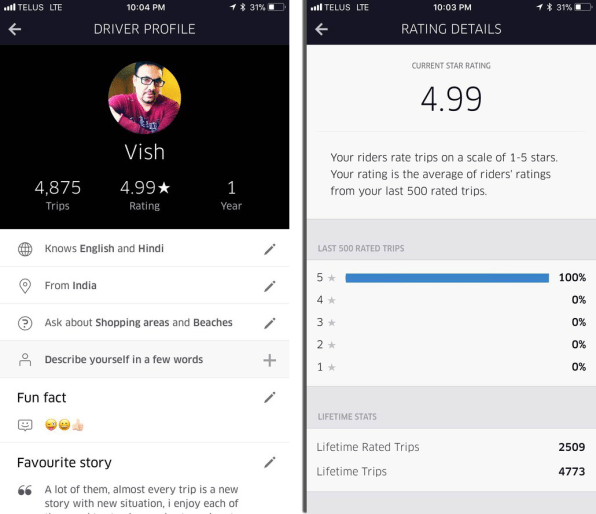
[Screenshots: courtesy of Vishwas Aggrawal]

4. GIVE THE TASK TO THE “YES” PART OF YOUR BRAIN

Vish says that the classic self-help book The Magic of Thinking Big by David J. Schwartz gave him “a formula in life always–the formula of ‘yes man’ and ‘no man’.” As Vish explains, Schwartz argues that “the human brain is like a factory  with two foremen: one is a ‘no man’ and the other is a ‘yes man’ . . . If you give the job to the ‘no man,’ your own mind will start finding logic and reasons to prove how can’t you do this job.”
“You know debate competitions?” he asks me. The debater “who is speaking in favor looks quite right, and the person who’s speaking against also has valid logic, so at the time you feel both are correct.” In other words, we all have a choice as to which parts of our own brains we charge with executing certain tasks and tackling challenges. After reading Schwartz’s book, Vish says, “I started working on my ‘yes man.’ That’s what I do at Uber as well.”
Vish lets customers alter routes if they choose. He even calls passengers at home to tell them their UberPool-ing friend was dropped off safely, and tries to accommodate small requests along the way.

5. WE BUY WITH ALL SENSES

Vish only eats raw vegetables and salad in his car to avoid smells or odors. His car needs to be a blank slate that passengers can immediately feel ownership of, not like they’re suddenly in somebody else’s kitchen. He has the same theory about sounds, which is why his radio is never playing when a customer climbs in. If they want the radio on? That’s fine. But he turns it off for the next person. And if they’re eating a garlic stir-fry or smell like smoke? That’s fine, too. But he sprays a lemon air freshener and opens all the windows to start fresh the next time.

6. USE THEIR NAME

Vish says that Uber wants drivers to say “What is your name?” to customers before they get in the Uber. He ignores that. Instead, he greeted me with, “Is it Neil?” and a big smile. In fact, the excitement in his voice made it more of a statement than a question: “Is it Neil!” Real name, right off the bat, plus an immediate flash of intimacy.
“I try to break the ice by appreciating people,” Vish explains. “When you appreciate someone, you are not giving a discomfort to him or her.” Instead, he’s found that these simple moments of warmth he creates are almost always reciprocated. “They will surely come back with a positive remark or a positive affirmation, sentence, or a line or a word to you.” He adds, “If you start with a smile, 99% of people will smile back.”

7. KNOW YOUR CUSTOMER SPECTRUM (AND WHO FALLS OUTSIDE OF IT)

I asked Vish how he deals with drunk customers on busy Friday and Saturday nights. He surprised me by saying he doesn’t serve them. Drunk customers aren’t his target market. As soon as he lands one, he heads home. It’s a signal he’s serving folks outside of his customer spectrum and his day is done. (In fact, Vish also benches himself whenever he’s having an off day because he says driving is too risky–a judgment call that takes real self-awareness, especially in the gig economy, where there’s no direct boss to manage your performance.)
“The most important thing in your life is to enjoy what you’re doing,” Vish adds, and for him, it’s as simple as that. Driving an Uber wasn’t his first choice, and it isn’t what he intends to do indefinitely, but he’s doing more than just making the most of it.
He’s enjoying what he’s doing–and creating an unbelievably positive experience for everyone he interacts with in the process.
Can we all say the same?


Amazon And Walmart: Digital Native VS Physical Presence

 
 Opinions expressed by Forbes Contributors are their own.
(AP Photo/Elaine Thompson, File)
Walmart and Amazon are competing in nearly every facet of their businesses. I’ve written about some areas recently including their approaches to innovation and the evolving role of the merchant within their organizations. Another area that’s a heavy focus for both organizations? The race to the top for their physical and digital presences.
This race started with Walmart WMT -0.07% acquiring Jet.com in August 2016. This was Walmart’s direct hit against Amazon’s web presence and an apparent signal that the company was ready to compete.
It didn’t take long, though, for Amazon to strike back with an acquisition of Whole Foods in June 2017. As I previously wrote, the goal of that acquisition was for Amazon to gain more of the rich data behind the Whole Foods customer and to garner all of the private label brands that the grocer had accumulated.
Since last summer, the organization has been looking at ways to leverage that acquisition with services like Amazon Lockers and Amazon Go to bolster its physical presence.
Much like with ecommerce, convenience is key for shoppers in the physical world. A main priority for Amazon is to shorten the time it takes for a consumer to complete a shopping trip. Amazon Go Is all about creating a frictionless shopping experience. It opened to the public in January 2018 and promised no cashiers or checkout lines and a streamlined shopping experience. This can be extremely beneficial given that in the past year, 86 percent of U.S. consumers said they left a store due to long lines, resulting in a purchase at a different retailer or no purchase at all according to 451 Research.
Additionally, Amazon Lockers are popping up in all Whole Foods locations. While they offer a convenient way for shoppers to pick-up and return items from Amazon.comAMZN +0.63%, they also increase the likelihood that someone will purchase something in-store while visiting the Locker.
All of this is happening while Amazon continues to bolster its online presence and offerings on its platform. More retailers than ever are selling through the channel, enabling Amazon to see into trends and pricing data and thus make more informed decisions on its own private label brands. More on that in my next article.
Walmart on the other hand already has a huge physical network with more than 5,000 stores. The company continues to improve its in-store experience, through technology like its “Store Assistant” app. Walmart is also testing new layout concepts and drawing people in with entirely revamped private label apparel brands.
The retailer is making great strides on the ecommerce side as well. Walmart recently released a new streamlined version of its website and mobile app, changing the look and feel while making it easier than ever for consumers to find the deals they know and love from the brand.
Also on the new website, you’ll find an increased focus on high-end fashion through its partnership with Lord & Taylor. Both companies expect to see a boost in sales for different reasons. Walmart can now expand beyond everyday-low-priced fashion and attract a higher-end customer. Lord & Taylor has expanded their online presence and customer base without incurring a lot of cost.
While all of those are great, I think Walmart’s best strategy to pull shoppers from Amazon.com is through its free two-day shipping offering. While Amazon offers this to individuals who have a Prime membership, which recently had an 18% uptick in cost, Walmart offers this to all shoppers with no fee. They just have to spend $35 in the transaction.
It’s really been interesting to watch these two close the gap, and I think it will only continue to heat up. Both will experience major pains as they continue to move into uncharted territory.
I do think that Amazon has gotten so big that they have started to underestimate other retailers, Walmart included. While anyone who has claimed this success certainly deserves the accolades, a massive ego provides an opportunity for a competitor. Seattle and Silicon Valley seem to have no shortage of ego whether supported by results or not.
The battle continues.

Thursday, July 5, 2018

Amazon_Go_food_shopper_exit_1.png

Amazon Go seen as welcome grocery option

But not all Americans would embrace cashier-free retail concept, survey says
Though Amazon.com Inc. is just getting under way with its Amazon Go stores, a new study finds that U.S. grocery shoppers are open to the cashierless retail concept.
Nearly 75% of 1,000 U.S. consumers polled by marketing firm Digital Third Coast for Schorr Packaging Corp. said they would be “extremely likely” or “very likely” to shop at an Amazon Go store if one opened nearby. What’s more, 84% of respondents indicated they would enjoy the Amazon Go customer experience more than conventional grocery shopping.
The checkout-free technology of the Amazon Go stores carries a lot of weight with consumers, the survey revealed. More than 25% of those polled said they would pay more for their groceries if they didn’t have to wait in line at the register.
Meanwhile, brands carry less weight: 32% of respondents said they would have less brand-specific preferences in an Amazon Go store.
“Amazon recently announced a futuristic take on the traditional grocery store, dubbed Amazon Go. It’s unknown how this will impact the brick-and-mortar retail industry, which is why we surveyed 1,000 Americans for their take on how Amazon Go will impact their lives, shopping habits and purchase decisions,” Aurora, Ill.-based Schorr Packaging stated in the study.
In January, Amazon opened the first Amazon Go store in Seattle. The e-tail giant confirmed that two more of the convenience-focused stores are planned for Chicago and San Francisco but hasn’t disclosed a timetable or details about the openings.
The 1,800-square-foot Amazon Go in Seattle carries primarily food and beverages, although nonfood items like batteries and over-the-counter medicine also are available. Food offerings include ready-to-eat breakfast, lunch, dinner and snack options made by the company’s chefs and local kitchens and bakeries.
The grocery mix ranges from essentials such as bread and milk to artisan cheeses and locally made chocolates. Also offered are chef-designed Amazon Meal Kits, which the company said enable consumers to make a meal for two in about 30 minutes.
Amazon’s “Just Walk Out” technology drives the Amazon Go store’s cashierless shopping experience. Overhead cameras, weight sensors and deep learning technology detect merchandise that shoppers take from or return to shelves and keep track of the items selected in a virtual cart. Shoppers use the Amazon Go mobile app to gain entry to the store through a turnstile. When customers leave the store, the Just Walk Out technology automatically debits their Amazon account for the items they take and then sends a receipt to the app.
The Schorr/Digital Third Coast survey found that this tech-heavy shopping experience doesn’t appeal to everyone, particularly older consumers. More than 30% of the Baby Boomers polled said they would be “somewhat likely” or “not likely” to shop at an Amazon Go store if one opened nearby. Also, 20% of respondents reported that they feel like they would be “losing out on something” by shopping at an Amazon Go store versus a traditional supermarket.
When consumers were asked to name the biggest drawback of shopping at Amazon Go compared with a conventional grocery store, 34% cited the lack of ability to use coupons. The next most-cited drawbacks were lack of product selection (29%), lack of social interaction (24%) and not being able to pay with cash (12.5%).
“Not everyone is on board — specifically, Boomers. They remain skeptical,” Schorr said. “While 75% of people surveyed said they would likely shop at an Amazon Go if one were located nearby, 30% of Baby Boomers said the opposite, that they would be unlikely to shop at Amazon Go even if it were conveniently located.”
The findings about Amazon Go reflected general preferences about grocery shopping uncovered in the study. Asked to rank the top factors influencing where they shop for groceries, respondents named freshness and quality, price, speed of shopping, availability of certain brands and location in order of importance.
In meeting their needs, 86% of consumers surveyed said they shop at one to two grocery stores in a single shopping trip. Brands didn’t have much sway, however, in determining where they shop for groceries.
“Presumably, people shop at multiple stores to make sure they get the goods and brands they prefer. But what’s interesting is what we uncovered in the survey: 75% of respondents said that, in theory, they would shop at a grocery store despite it not carrying their favorite brands,” Schorr noted. “In fact, only 13% of respondents said that it was extremely important to them for a grocery store to carry their favorite brands.”
Still, one in four of those polled said better-designed packaging would affect their purchasing decisions in an Amazon Go store. Other packaging-related factors that consumers said would influence their Amazon Go purchasing decisions would be discounts and promotions on the packaging (57%), clearer messaging (24%), unique design (17%), and larger logos and brand presence on the label (2%). Thirty-five percent of Boomers indicated they were more interested in product variety than packaging.

The Trojan Horse: Will Instacart Become A Competitor Of The Grocery Retailers It Serves?

 
 Opinions expressed by Forbes Contributors are their own.
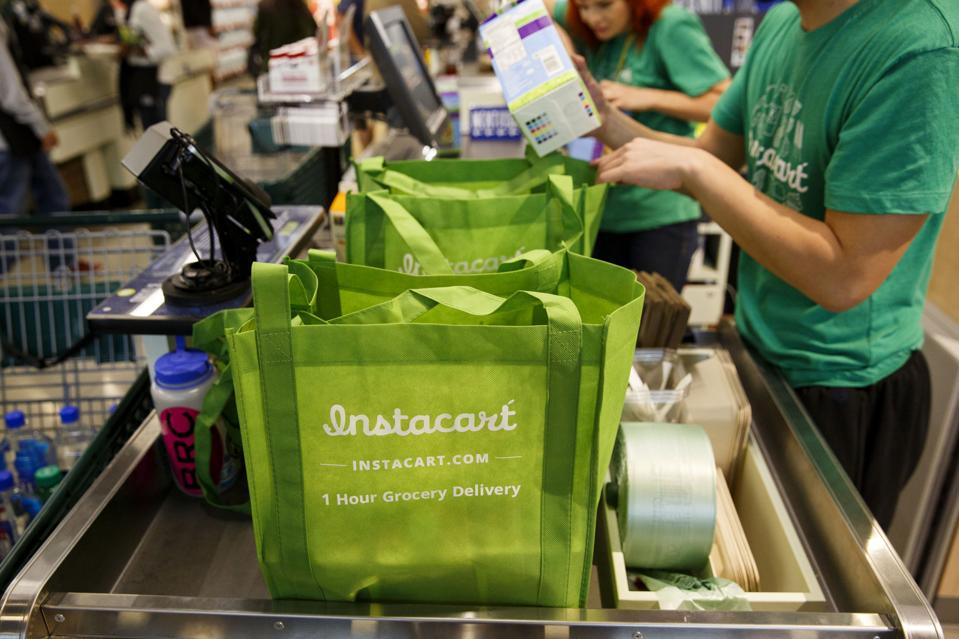
InstaCart employees fulfill orders for delivery to customers. Photographer: Patrick T. Fallon/Bloomberg
True story: Sam Walton, the founder of Walmart, is famous for using the phrase “steal shamelessly” when it came to keeping a close eye on competitors and applying the lessons learned to make Walmart a better company. Sam even wrote openly about stealing ideas in his 1993 autobiography Sam Walton: Made in America.
When Walmart was founded in 1962, its biggest competitor was Kmart. Being naturally curious and competitive, Sam made the decision that he was going to learn everything possible about how Kmart operated. Sam’s chosen method for learning? Go inside as many Kmart stores as possible to look around, and establish a relationship with executives from Kmart.
Sam Walton understood the importance of data to a retailer better than anyone. Data as it related to store operations, pricing, supply chain, technology, organizational structure, supplier relations, product assortment, promotions, consumer behavior and especially customer experience.
Walking into as many Kmart stores as he wanted and openly discussing retail with Kmart executives provided Sam with exactly the data he desired. Having unlimited access to Kmart allowed Sam to learn the two most important lessons about the company—its strengths and weaknesses.
And what did Sam do with the knowledge he gained? He modified Walmart’s business model to create a company that outperformed Kmart at every level, resulting in Kmart losing all relevance. Specific details on how Walmart grew can be found in the book Walmart: Key Insights and Practical Lessons from the World’s Largest Retail.
Sam Walton — the founder of Walmart and arguably the most influential and capable executive in the history of the retail industry.  (1985)(AP Photo)
The Trojan Horse 
Fast forward to 2018 and once again we are experiencing a repeat of the process utilized by Sam Walton to decimate Kmart. This time the company so deftly gaining access to retailer is Instacart, which recently announced it is expanding into another city.
Instacart requires a grocery retailer to provide them with certain data and access so Instacart can set up the grocery retailer within its core systems. Retailers invite Instacart inside their four walls and voluntarily provide them with data whereas Sam Walton had to often use his wits and charm to get the information he wanted. Kmart wasn’t concerned about Walton as it didn’t view him or Walmart as a threat.
Grocery retailers have embraced Instacart as few grocery executives believe Instacart will ever become a competitor. Kmart was wrong about Sam. Are grocery retailers wrong about Instacart? If so, Instacart is operating in a fashion like the famous Trojan Horse in Greek mythology as grocery retailers are enthusiastically inviting in an entity with the potential to become a major competitor.
I strongly advise the grocery industry to crush all assumptions that Instacart will look and operate the same way three to five years from now. In fact, the mantra I live by is Crush All Assumptions about business in general. Case in point: How many grocery executives thought Amazon would acquire Whole Foods? What prevents Instacart from changing its business model? Nothing.
Instacart will have no choice but to expand its business model to survive. Amazon is accelerating the expansion of Prime Now for grocery delivery and Target has accelerated the expansion of Shipt to deliver groceries and general merchandise.
Sooner rather than later, the grocery delivery and online order fulfillment services provided by Instacart will become a commodity business as more third-party delivery companies enter the market, and established third-party delivery companies expand.
Instacart attempting to add more services to current customers and signing up small regional grocery retailers to add scale is not a strategy that will insulate Instacart from disruption.
Kroger’s partnership with Ocado will allow Kroger to end or greatly scale back their relationship with Instacart and other third parties for grocery delivery. I anticipate that many grocery retailers will copy what Kroger is doing and this will impact Instacart.
CommonSense Robotics will become the go-to company for retailers looking for an automated solution to fulfill online grocery orders as well as meet demand for groceries in rural and urban areas. CommonSense Robotics can even build and operate sites capable of performing a dual role – fulfilling online grocery orders and building pallets to replenish groceries to retail stores.
Grocery retailers that want to replace Instacart can turn to Delivery Solutions, a Texas-based technology company that can help enable an intelligent, orchestrated mix of in-house and third-party delivery capabilities. Many grocery retailers have come to realize that owning the last mile and maintaining a direct relationship with its customers is more strategic than outsourcing last-mile deliveries. Delivery Solutions gives command and control of the customer experience back to the grocery retailer.
Instacart is under pressure due to the myriad of changes taking place in the grocery industry that are directly affecting the retailers served by Instacart. Instacart must adapt. Below are options Instacart could consider:
1. Get acquired. Google, Facebook, Microsoft, Walmart or Cerberus Capital Management, among others, could acquire Instacart and create a re-imagined experience for groceries. Cerberus owns the grocery retailer Albertsons and is in the process of attempting to acquire Rite Aid. If given the choice of acquiring Rite Aid or Instacart, Albertsons should acquire Instacart. I believe Instacart, Boxed Wholesale and Sprouts are vastly more strategic to Albertsons than Rite Aid.
2. Instacart can sign a strategic partnership with or acquire Boxed Wholesale or any number of grocery distribution and product manufacturing companies. If Instacart and Boxed team up, the combined companies could expand deeper into grocery retailing, B2B and B2C bulk sales and distribution, private label grocery and CPG manufacturing, wholesale grocery distribution, etc. (Full disclosure: I recommended to Kroger in 2017 to acquire Boxed Wholesale with final instructions to be prepared to bid as high as $600 million to acquire Boxed. With an estimated value of $470 million, Boxed turned down Kroger’s offer of $400 million.)
3. Instacart can sign a strategic agreement with or acquire CommonSense Robotics. A combined CommonSense Robotics and Instacart offers very interesting possibilities for the grocery industry.
4. If able to raise the required capital, which Instacart has proven it can do, Instacart could acquire the online retailer Peapod from Ahold Delhaize. Peapod has exceptional opportunities for innovation and growth whether owned by Instacart or Ahold Delhaize.
5. Leading CPG companies would be wise to consider acquiring Instacart and copying the Walmart model. Walmart acquired Jet.Com to gain access to technology and a team of executives under the leadership of Marc Lore, who could breathe new life into Walmart’s stagnant e-commerce business. It worked. Instacart’s executive team is like the one at Jet.Com—visionary, smart and capable—and they would add tremendous value to a CPG company looking for ways to ignite innovation and growth.
I believe Instacart has every intention of exploiting its technology and business prowess to the fullest to grow and remain relevant. It is entirely plausible that Instacart, under the right circumstances, could open innovative Instacart-branded stores—especially if Albertsons acquires Instacart.
I’m not attempting to predict what Instacart will do, I am merely pointing out the fact that Instacart has options they can pursue to change and expand its business model.
The Ghost of Sam Walton
Aldi, Sam’s Club, Costco, Kroger, Whole Foods, Ahold Delhaize, Publix, Supervalu, Wegmans and Albertsons are all customers of Instacart. The retailers I listed just happen to be the leading grocery retailers in the United States and in the case of Aldi and Ahold Delhaize, global grocery leaders. Instacart serves over 200 grocery partners in the U.S. and Canada. Should the executives at these retailers consider the possibility that Instacart could become a competitor? Yes, they should and here’s why:
  • Instacart is analyzing and learning how the retailers it serves operate across every aspect of grocery retailing. Or, stated another way, grocery retailers are teaching Instacart their business models.
  • Instacart is learning everything possible about the consumer behavior of the customers at each grocery retailer that has a contract with Instacart.
  • Instacart is thoroughly identifying the strengths and weaknesses of each grocery retailer they serve.
  • Instacart is the leveraging data it has collected to perform long-term strategic planning and “What If?” analysis to identify the optimal future state grocery-store format, technology, operating model, pricing, assortment and supply chain to delight customers across the grocery industry.
  • Instacart’s highly-skilled executive team isn’t satisfied with the status quo and the team will modify the business model to position Instacart for growth and relevance—this means applying the lessons they’ve learned from the grocery companies they serve to their advantage.
My advice to grocery executives who don’t believe Instacart may one day become a competitor is to learn from the past. Kmart executives used to sit and drink coffee with Sam Walton, someone they viewed as nothing more than a folksy CEO of a small company named Walmart who wanted to learn everything possible about how Kmart operated as a company. Walmart went on to become Kmart’s most formidable competitor by applying the lessons Sam learned from Kmart and other retailers. The ghost of Sam Walton lives on.

One year later, Kroger rival Lidl’s US expansion has fallen short

By   – Staff Reporter, Cincinnati Business Courier
A year ago, the grocery world was abuzz as German deep-discounter Lidl began opening its first U.S. stores on the way to what was expected to be 100 in a year and more after that. Its growth plans left many wondering how established supermarket operators such as Kroger Co. would respond.
Now, a year later, the talk about Lidl has quieted to a whisper and the operator has just 53 U.S. stores. That’s a far cry from the hype last summer as Lidl opened its first 10 stores in June 2017 while targeting 100 within the next year.
Lidl competes largely on price. It’s similar to Aldi, another deep discounter – although Lidl boasts in-store bakeries, more fresh produce and higher levels of service.
“They came in with a pretty big splash,” Jim Hertel, senior vice president at Long Grove, Ill., food retail consultant Inmar Analytics, told me. “But I don’t know that they offer anything superior except price.”
Kroger (NYSE: KR), the nation’s largest operator of traditional supermarkets, Walmart (NYSE: WMT) and others quickly cut prices in response, making it tougher for Lidl to woo customers.
“My guess is they’re rethinking their strategy,” Hertel said. “Fifty-three stores is not what they came here to do. They have to feel they have a workable model with a scalable proposition. They might try to see their way to four digits of stores (at least 1,000) or take their ball and go home before they lose hundreds of millions of dollars.”
Lidl will continue to open more stores after opening 53 U.S. stores in six states along the East Coast since June 2017, U.S. spokesman Will Harwood said.
The grocery has abandoned plans to build stores in Cary. Leon Capital Group claims Lidl backed out on agreements to buy property and operate stores after signing an agreement, and after the firm devoted money to designing the project and developing infrastructure on the site, according a lawsuit by Leon Capital.
“It’s been pushed back six months while they figure out some things internally,” Charlie Fulk of Meridian Realty Group, which represents The Shoppes at Sedgefield Crossing, told Triad Business Journal in March.

sustainability

Sustainability when shopping 7_5_18
© Nullplus delivery man
© Nullplus
Consumer attitudes are changing, consumer shopping behaviours are changing and technology is changing. And they’re all about to come together to change the face of retail delivery as we know it.
Which means the logistics world needs to be prepared.
Here are our top five predictions for the future of retail delivery: It will
become cheaper and quicker for the consumer; become more local; be managed by voice control; boom with new technologies; and offer an omni-channel experience.
Let’s take a closer look at these top five predictions for the future of retail delivery
Cheaper and quicker
Consumers want free deliveries. A survey of over 1,000 UK consumersfound that 94% were more likely to make an online purchase if there’s a free delivery offer, and most people expect free delivery with orders over £10.
If they had to pay, consumers said £2-£4 is a reasonable delivery fee, no matter the product retail value. But if the costs are too high, then 66.7% said they’d abandon the purchase altogether.
Consumers want their products quicker – PWC found that fast and reliable delivery (same-day and click-and-collect) matters to 29% of UK shoppers.
A different survey, by Trimble (referenced by Econsultancy), found that “even though a quarter of respondents said delivery costs were too high, 40% of shoppers were willing to pay for next-day delivery, and 22% would pay for delivery within a two-hour slot.”
What this means for logistics
Any retailers that have the profit margins to offer free delivery, should offer free delivery. Whether that’s for orders over a specific amount, like £10, for set time periods or if consumers buy two items or more, free shipping can help to convince consumers to complete purchases, and increase sales. And if offering free shipping isn’t an option, then testing a low delivery fee between £2 and £4 could prove to be an effective strategy.
Last-mile delivery makes offering quick deliveries difficult, because four things need to be in place: products need to be available locally; retailers need to have a real-time view of their inventories; finding and packing of the product needs to be speedy; and last-mile logistics providers need to be able to pick up and deliver orders ad hoc or multiple times throughout the day. If logistics retailers and logistics providers can work together to tick these four boxes, then McKinsey says: “Same-day delivery turns into a pure game of scale.”
Big e-commerce giants like Amazon offer repeat customers Amazon Prime, a delivery subscription service where consumers pay £79 a year or £7.99 a month for free one-day delivery, priority delivery, standard delivery, same-day delivery and more. Consumers are happy to pay in exchange for speedy deliver times.
Payment service providers like Klarna are offering a try-before-you-buy payment structure – offering customers an order now, pay after delivery solution. If you’re like asos and KNOMO, and you offer free delivery, this means consumers can order items (up to a certain amount) through Klarna, get them delivered for free and try the item on at home before committing. They can then decide to either pay for the item 30 days after shipment, or send it back, again for free.
More local
Thanks to the rise in mobile usage and the immediate internet access this has given consumers, searches for purchasing influencers like stock information, offers and opening times are becoming more focused on location.
Google says words like “near me”, “closest” and “nearby” are becoming more common in searches, with 30% of all mobile searches related to location. And, of those consumers searching locally on their smartphone, 76% visit a store within a day, and 28% of those searches lead to a purchase within a day (Think with Google).
What this means for logistics
Local searchers have high purchasing intent and logistics providers and retailers need to work together to make sure warehouses are well-stocked and close enough to stores to help deliver reserved items and orders, and to keep stores in constant supply.
Retailers like Argos offer ‘Check & Reserve’ to consumers looking for a particular item in their local store, and give them the option to reserve their item without payment, where they’ll then complete the purchase by the end of the next working day. They also offer Fast Track reservation online, for same-day, instore pick-up and delivery on 1,000s of items. If items are out of stock in the local store, then consumers can ask for an alert to let them know when the item is available for purchase at a local Argos – helping the retailer recapture the local buyer’s purchase intent. Logistics providers need to be set up to travel between branches to locate products and retrieve stock from warehouses that are located further away.
Voice control
Voice search will play a big part in the consumer purchase and logistics fulfilment journeys. Walker Sands polled over 1,600 consumers and found that 19% had already made a purchase using a voice-controlled device in the past 12 months. The poll results also suggested that voice search was more of a channel for millennials, with 37% saying “they always or often shop online via voice-controlled devices”, and 43% have made a purchase using voice in the past year.
What this means for logistics  
If consumers are making purchases via voice search, they’ll likely expect the rest of the purchase funnel to also offer a voice search option. Which means that logistics companies need to optimise their delivery updates and returns processing to integrate this technology. If a consumer wants to know where their order is, and they ask their voice assistant, logistics companies need to respond via voice.
Logistics companies will be able to use voice search to help them manage deliveries, plan delivery routes, schedule deliveries and assign delivery runs to drivers. This kind of automation could also help to cut back on logistics operational costs.
New technologies
Make-up retailers like L’OrĂ©al are already using apps like Makeup Geniusto let consumers virtually try makeup before buying, and more brands, like Sephora and Charlotte Tilbury, are following suit.
Ted Baker has already experimented with a virtual reality digital concept store in Shoreditch, giving visitors a look at clothing items in closer detail and a chance to play games or watch films and interact with the Ted Baker surroundings.
Augmented and virtual reality make it easier to virtually do things, like try clothes for size and see how large consumer devices might look in the home. The sense of not being able to see or touch an object will become less of a problem, and that will help to reduce buyer hesitation. With an easier product journey and fewer obstacles, technological advancements will help to facilitate more online orders.
What this means for logistics
Logistics providers should also take advantage of augmented and virtual reality technology to help meet the increasing number of online orders, and transform the world of logistics.
Augmented reality can help logistics providers better plan warehouse layouts to make finding orders easier, and it can also help workers locate packages ready for shipping. Augmented reality can also help make final-mile delivery easier for drivers, helping to pack lorries and navigate to destinations (read more on augmented reality and how it’ll transform logistics in Supply Chain 24|7).
A more realistic view of how items of clothing, make up and jewellery will look for consumers should, in theory, offer a realistic and decisive shopping experience – helping to reduce the number of online orders being returned.
Logistics providers like SEKO are already researching and implementing new technologies into the process. We deploy 3D load optimisation software for inbound containers for optimised stock replenishment. We don’t see drones launching at scale in most major markets for final-mile deliveries, but we are actively researching drones for use within the warehouse for more optimal picking of low-turning SKUs on the highest out-of-reach shelves.
An omni-channel experience
Consumers are creating and managing orders and returns across channels, and retailers will need to offer a consistent customer experience at every touchpoint.
From chatbots to email, social media, phone and more, channels need to be working together and giving the same message to help generate orders and offer the best customer experience.
Retailers need to be working with logistics providers to make sure they’re offering the same message and the same customer experience to help generate more orders for their retail partner.
What this means for logistics
The omni-channel shopper needs an omni-channel logistics solution. By working with retailers and offering visibility across communication channels, and offering real-time fulfilment options to help their customers and decide on the best fulfilment location, logistics providers can be sure orders will arrive at the right place, at the right time.
And, because retailers will need to share information with logistics providers to offer an omni-channel experience, both parties will need to make sure they’re keeping customer data safe with a cryptocurrency technology such as blockchain.
Imagine a logistics world where “every time a product changes hands, the transaction could be documented, creating a permanent history of a product from manufacture to sale. This could dramatically reduce time delays, added costs, and human error that plague transactions today” (Supply Chain 24|7).
SEKO is already using technology solutions like interactive voice response (IVR) for automated outbound calls and delivery scheduling, and immediate proof of delivery via an app to respond to changing consumer behaviours.