“Innovation is a repeatable process that can be studied, learned, and practiced—one that will sustain a company’s profitable growth for decades.”
Masters Of Innovation is a manual for creating a permanently innovative organization, deriving lessons for best practices from the experiences of senior teams at Best Innovators—members of a select team of companies that come in all sizes and in all industries around the world.
The Best Innovator competition was first held in Germany in 2003. A.T. Kearney partnered with the German business magazine
WirtschaftsWoche to recognize companies that were not only best in class in their products and balance sheets—though they were that too—but had also achieved success by building an organizational machine for sustaining innovative behavior.
Since 2003, the competition has grown to include nearly 20 countries. In that time, about 2,000 organizations have entered the competition.
Masters of Innovationshares the lessons we’ve learned from observing all of them, not just the winners. These include companies like Ferrari, STMicroelectronics, and Whirlpool.
The following excerpt is the first chapter from
Masters of Innovation: Building the Perpetually Innovative Company (LID Publishing, 2015).
Meet the Masters of Innovation
Innovation is not an art. It’s a capability. But more than that, being innovative is a repeatable process that can be studied, learned, and practiced—one that will sustain a company’s profitable growth for decades.
The past 15 years have brought a flood of how-to books about innovation, most of them replete with stories about startling eureka moments and charismatic leaders. These stories are fun to tell but usually have little to teach other organizations about building their own innovation capabilities, other than to hope lightning strikes or to hire a colorful CEO. Missing from the stories are the mechanics of what it takes to make innovation more than a breakthrough moment that lets a company ride a fleeting lucrative wave.
The world’s Best Innovators are not just the hot companies of the moment. On the contrary, they are often growing in traditional businesses—automotive, rail transit, household appliances—where slow growth would be expected. Many have been in business for generations, and still they grow. Compare that record to the churn among members of the Fortune 1,000, which saw 60 percent of its list change between 1993 and 2003, the year of the first Best Innovator competition.
Shareholders in Best Innovator companies have enjoyed the benefit of this commitment to profitable long-term growth. Since the competition started, the Best Innovators’ shares have outperformed not only their peers, but also the stock market. In fact, there are several types of innovation, from product and process innovations to business-model and service innovations. But they all have one thing in common: they all start as ideas and become market reality. And none earns the title “innovation” until it is making money.
Common Virtues
Best Innovators are often companies under pressure. Sometimes they face a threat of commoditization to a core product, or they might be contending with new entrants or an upstart technology. Yet what is remarkable is that their innovation strategies are not reactive. Their strategies are forward-looking and constant, open to course correction but clear in their destinations, through good times and bad.
It is telling, for example, how often Best Innovators have created their own adaptation of 3M’s New Product Vitality Index (NPVI), which measures the percentage of revenue derived from products launched in the past five years. For Best Innovators, a key performance indicator (KPI) such as NPVI is not a backward-looking accounting tool. It is an in-flight gauge that measures the progress of an entire innovation portfolio, a fact-driven view into what’s working and what needs course correction.
Best Innovators share common virtues. For all of them, integration of process and deep-rooted innovation cultures are character traits. Best Innovators are always in a state of future-mindedness, and they don’t get blindsided by change.
Consider CEWE Stiftung & Co. KGaA (German Best Innovator, 2010). From its start in 1961, CEWE spent decades among the leading European film-processing companies and was a rival to worldwide brands such as Fuji and Kodak. But film photography—analog—is now a niche business. For the past 20 years, the incumbents have struggled not only to respond to the advent of digital picture-taking but also to survive.
As once-great names have left the photography business, CEWE has grown. Better than its rivals, CEWE perceived in the 1990s that digital photography was, to risk a cliché, a disruption that would upend a well-established business model. It invested heavily in digital photo-finishing capabilities while its core analog business was still growing—a strategic choice that brought some initial internal resistance. Even as digital photography was becoming the dominant consumer technology, CEWE prepared for the transformation the Internet would bring to the old model of developing photographs through the mail or at the local pharmacy. As early as 1994, it was taking steps to provide online photo finishing and a range of customizable consumer products such as calendars, posters, and even canvases. Most important to sustained growth was the 2006 introduction of the CEWE PHOTOBOOK, built on CEWE’s historic base of retailers. Since then, the company has sold millions of photobooks.
One day, these successful innovations will reach the end of their life cycles. CEWE wants to be ready when they do. It keeps a close watch on trends that may affect its business and predicts that the next big opportunity will come from mobile devices.
“Innovation is 5 percent analysis and 95 percent fast and focused implementation,” says Rolf Hollander, CEWE’s chairman. “Profitability is required to invest in growth areas because our company has relatively limited resources. We need to focus on major areas for growth and define the right innovation search fields.”
It’s Never about Brute Force
The list of Best Innovators includes several incumbents in large industries. Whirlpool, 3M, Ferrari, Coca-Cola, and Volkswagen are just a few of the big companies that warrant the title Masters of Innovation. But from the beginning, what has distinguished the Best Innovator club is the diversity of businesses and the range of sizes. Among the most compelling stories are those of two mid-sized Czech companies: LINET, a US$160 million maker of advanced hospital beds with just 800 employees, and ČKD, a 2,000-person firm that steadily reinvented itself in the 25 years after the Cold War from a struggling maker of tramcars into a forceful world presence in energy engineering and services.
The lessons learned from Best Innovators are not dependent on business interest, size, or region. For example, in the analysis below, developed from publicly available data, it is striking that there is no correlation between R&D budget and innovation.
Again, there is no link between money invested in R&D and profitability, measured by earnings before interest and tax (EBIT). Profitability is the reward for doing the right things in the right way.
Hard data from Best Innovators reveals that it’s not how much you spend but how you spend it. For these organizations, innovation is not a factor of brute force—lots of budget, lots of time, lots of people—any more than it is the fruit of some eureka moment. Innovation for them is a management capability and a repeatable process.
To get their innovation strategies right, Best Innovators invest upfront in understanding market, technology, and service dynamics. They are investing time more than money. Once they have innovation strategy right—not just on paper but in the minds of all their most influential internal decision makers—they begin collecting the ideas that have potential into a managed portfolio. We call this portfolio search fields. These are the wellhead of the innovation flow.
Sometimes, we characterize the Best Innovator philosophy as “from the market to the market.” What this means is that innovations in embryo emerge from close attention to the market—the voice of the customer—often before the market knows it is saying anything at all, as was the case with digital photography for CEWE. The early work on an innovation portfolio is the collection of ideas that flow from this attentiveness. We describe this as the “desired-outcome approach” to idea development, one that frames the market’s appetites in terms of what customers need. Managing these ideas depends on a rigorous connection between them and corporate strategy.
Emotion and Fact
We don’t minimize the intellectual and organizational challenges of managing an innovation portfolio that is loaded with ideas. Throughout this book, when we talk about managing an innovation portfolio, we are not just talking about one idea nurtured from market insight to product launch. In reality, there are hundreds of embryonic product ideas in a large corporation, dozens in a smaller one, and all at different stages of their life cycles. These ideas overlap and influence one another. The overlap and influence are managed in terms made explicit in the organization’s culture and processes.
Another way of talking about culture and processes is to talk about emotion and fact. Best Innovators have a visible organizational desire to balance these two elements in creating a foundation for recurrent innovation. Naturally, a clear and convincing vision is needed to excite a company’s culture (and shareholders). But without a fact-based argument to realize the vision, excitement is not enough.
To balance emotion and fact, Best Innovators navigate a natural tension between flexibility and control. The tasks of control—progress tracking, coordination of innovation and functional strategies, deviation analyses, control of planning premises and processes—make excitement about the vision tangible. The devotion to KPIs and rigorous stage-gating so typical of Best Innovators allows them to give their organizations a distinctive degree of freedom, a kind of structured autonomy that encourages creativity and the birth of new businesses.
Every organization has its cultural norms, unspoken or not, for good or for ill. Members are attuned to what is valued, and they behave accordingly. If culture is the sum of what is prized, then the culture’s norms should prize innovation. This is how Best Innovators create an environment where smart people thrive.
“You build a foundation for innovation,” Hollander says. “Prerequisite is a culture with an open mind that stimulates employees to come up with new ideas by ensuring a certain level of freedom. You want them to dare to take risks.”
Without structure, there is no creativity—a fact seen again and again in the way Best Innovators first develop and then manage their innovation portfolios. All of them pursue clarity on a fundamental question: what do we want our innovation strategy to do for us?
Consider Whirlpool Latin America (Brazil Best Innovator, 2010). The company is the leader in Latin America’s home-appliance market and a growing part of Whirlpool Corporation’s revenue. In 2008, Latin America contributed 19 percent of the parent company’s total revenue. By 2013, that rose to 26 percent. As of this writing, Whirlpool has the top market share in the region.
By the standards of Best Innovators, Whirlpool Latin America’s innovation management system is still young. It was developed in the mid-2000s in response to what the company saw as an emerging trend toward commoditization and price reduction in the appliance business. Convinced that customers would pay a premium for genuine innovation, Whirlpool was deliberate in building an innovation culture. Senior leaders were assigned an annual innovation pipeline target. But how would that be measured? How could anyone tell if what was in the pipeline had long-term value?
To earn the status of potential innovation at Whirlpool, an idea must make its case. First, it must contain a compelling proposition for customers and be aligned to the company’s brands. Second, it must create durable competitive benefit—in other words, it must make use of Whirlpool’s patents, technology, distribution, brand strengths, corporate scale, or some other advantage unique to Whirlpool so that competitors cannot follow for at least two years. Finally, a new idea must offer the prospect of serious shareholder value.
Senior leadership’s first move was to define innovation in a context particular to Whirlpool. A common definition creates several benefits: it avoids time-wasting discussions about what is meant by innovation and clarifies the goals of the innovation strategy. It also generates KPIs to assess the performance of the innovation portfolio and the performance of those managing it.
The results are in the numbers. Today, the portfolio of Whirlpool Latin America’s products classified as innovative is responsible for one fourth of its revenue. These products are on average two to three times more profitable than the rest of the company’s product line.
Best Innovators answer the questions that matter, beginning with the mechanisms by which innovation can deliver long-term profitable growth. They can name the market segments where they will concentrate their energies and the competencies they will need to acquire, buy, or borrow to succeed. They match this inventory of competencies against their talent-development strategies.
Drawing the Roadmap
Best Innovators adjust their innovation machines all the time, seeking the right balance of short- versus long-term projects, new products, and incremental improvement. They are specific about innovation speed—the pace of an idea’s development and commercialization—and they’re attuned to measures of how long it takes for an idea to develop into a money-making product. They draw an innovation roadmap to get them where they say they need to go.
Among the rewards of this rigorous setting of coordinates are the guidelines a company creates for weaving innovation strategy into everything it does, reinforcing the foundation of culture and process. Search fields are the earliest stage of an idea’s evolution and necessarily very broadly defined. But they still need to be defined, even broadly, and the definition is something that every Best Innovator has to frame for itself.
Tata Motors developed its search fields with the intention of raising its profile in the small-car segment of India’s auto industry. For Volkswagen (German Best Innovator, 2008), the search fields are not only complex but also broad, which is appropriate for a global giant producing multiple product lines.
In each case—Tata, Volkswagen, and every Best Innovator—the search-field portfolio is a ferment of insights drawn from hearing the voice of the customer, from applied industry knowledge of technology and competitors, and from watching the wide horizon of scientific, social, and political trends of all kinds. A firefighting-equipment maker might study ways to make its products more comfortable for women (Rosenbauer, Austria Best Innovator, 2009). A home-products company might take note of how bathrooms are emerging as a surprising status signifier in the West and, increasingly, elsewhere (Henkel Laundry & Homecare, German Best Innovator, 2010).
The search-field portfolio is the starting point of the innovation roadmap, which ideally looks ahead to the eventual end of an innovation’s life cycle. Especially striking about Best Innovators is how many are thinking about a product’s whole life cycle, including not just future improvements but its inevitable eclipse by the next big idea.
“In line with Schumpeter’s theory of creative destruction, innovation can also include the decision to leave behind some areas of the present business,” says Georg Kapsch, CEO of Kapsch TrafficCom AG (Best Innovator, 2008). “It is not only about doing new things but also about getting rid of traditional products, services, and even companies. Otherwise, we could not afford to invest in new areas.”
The roadmap keeps the organization on track, describing not only budget and personnel but also when an innovation will enter the market and begin to earn back its investment—it’s time to market and time to profit.
Alignment in Support of the Innovation Portfolio
For Best Innovators, the job of prioritizing the possibilities in their innovation portfolios is never finished. At every point along the way to market, the business case for an idea is tested to see if it still holds up.
This would seem to be an obvious best practice for any company, and yet it is frequently overlooked, usually because of poor communication norms. Markets move, planning premises change, variability in the cost of raw materials alter pricing dynamics even before a product launches. All of these have direct effects on profitability. A regular update of planning premises is an institutional habit with Best Innovators. A change in those premises might mean one idea needs to be killed or delayed while another is brought forward in the portfolio’s list of priorities.
An innovation portfolio is like a funnel. But the Best Innovator funnel has an odd shape. It does not taper steadily to product launch. Instead, the funnel abruptly pinches near the middle, around the time search fields begin to yield specific ideas that can be argued with a business case or, as the case may be, rejected.
An innovation portfolio is built on a sequence of stage gates shepherding ideas on their way to market. An idea that can be tested for its investment risk advances to the narrow part of the funnel: the development-project portfolio. At this point, a new service or product begins getting concrete in its features and value proposition. This is also the point at which it is either shelved or rejected.
At every stage in an idea’s development, collaboration makes a concept stronger. The definition for collaboration is cross-functional cooperation within the organization. We find this sort of internal alignment typical of Best Innovators, but—sometimes to our surprise—it is not always the norm among their peers.
“The dilemma,” Kapsch observes, “is how to establish some form of organizational ambidexterity.” By ambidexterity, he means being an organization of multiple competencies. Many CEOs would agree—in theory. But the practice is more difficult.
Internal alignment is a predictor for an innovation’s long-term value to a company and its shareholders. We all know, for example, about Sony’s failure in the mobile entertainment market. Often forgotten is that senior leadership didn’t focus the attention of the whole organization on the meaning of mobile entertainment for growth. Eventually, the consequence was the surrender of Sony’s early lead in smartphones and Apple’s dominance of the market.
“Cross-functional” does not mean that an idea is developed sequentially, handed along from function to function for each to give their particular perspective. Time and again we’ve seen exactly that process, and time and again we’ve seen it add layers of unnecessary cost and complexity that reduce profitability by eye-popping amounts, as we will see in chapter 5 “Increasing Innovation Efficiency and Speed.” A cross-functional approach is a collective effort, a genuine collaboration with diverse elements of a company learning from one another and working toward a single vision.
In running their innovation-strategy processes, many companies struggle to define the balance of top-down guidance from senior management versus bottom-up participation by the grassroots of the organization. Best Innovators think past this hierarchical conundrum by thinking cross-functionally. Henkel did it by creating what it calls InnoPower teams, responsible for specific product categories and all related innovation projects. The teams develop innovation strategies in consultation with senior management, approved in Henkel’s annual planning process and then implemented. The teams are chaired by a product-category leader and include representatives from every major function. Participating in InnoPower teams is a mandatory step on the career path of Henkel’s high-potential employees.
Best Innovators have all kinds of organizational structures, but overall, they integrate more internal functions in the innovation process than the average of all participants in the competition. All of them have well-considered processes to ensure continuous cross-functional involvement of pivotal internal functions—chief among them R&D, production, sales, and tellingly, procurement.
The talent for cross-functional collaboration is true of Best Innovators when they engage in partnerships outside their own organizations. Best Innovators know that the best and brightest talents don’t all work for them. To supplement their inventory of competencies, Best Innovators appear to step naturally into intimate collaborative relationships with an array of outside players—from customers and suppliers to universities, government agencies, and even competitors.
The world is a complex place, after all, with knowledge generated from every corner. Best Innovators see the world as a network of knowledge clusters, of which their organization is just one. For Best Innovators, knowledge management is more than a vogue phrase. It is an actively managed capability in support of alignment and creative flexibility. They link their cluster to others, transfusing capabilities into—and across—their organizations. Coca-Cola, for instance, has built a process for scouting the world for the technical competencies it needs to support innovation. It calls the process External Technology Assessment/Acquisition.
“You basically plug yourself into the nerve center of science, research, innovation, and entrepreneurship outside the company and around the world,” says Guy Wollaert, Coke’s CTO. “We have a map called the heat map of technology and invention, and we deliberately plug ourselves into those nerve centers. I call it ‘plug the brain.’”
As a group, Best Innovators are consistent in their concern for the distribution of new thinking, especially new thinking that emerges from successful initiatives in one part of the company but that might have application in another part. This is what Volkswagen CTO Ulrich Hackenberg calls “democratizing innovation.”
But what does this kind of flexibility look like in an organization that also wants to be rigorous in its management process? A fair amount of the time, it looks like managed tension.
The tension is managed with clear guidance about developing innovation strategy—the things people in an organization should be thinking about—without being overly prescriptive, like Whirlpool has done, to cite just one example.
The KPIs to which Best Innovators are conspicuously attached help enormously in providing guidance. They let senior managers and members of an organization at large track the progress of the innovation portfolio with hard facts. When speaking to the senior leaders of Best Innovator winners, it is remarkable how many can rattle off KPIs for their innovation strategies, especially NPVI, time to market, and even time to profit—the latter a measure of how long a product needs to become profitable, measured from the moment it was decided to develop the product or service. It is the essential KPI of an innovation portfolio.
That clarity is essential to providing a creative structure to the overlapping networks we’ve described. Members of those networks—not all of them inside the organization—need to communicate with one another and make decisions quickly. With one collaboration tool or another, they talk to one another (which we acknowledge is unnerving to many IT departments). Most of these conversations about commercializing ideas are not explicitly directed by senior management. But with clarity of vision and agreement on mission, the collective evaluation of ideas acquires structure that permits new ideas to be applied faster.
The Structure of an Innovative Organization
What organizational structure supports innovation? There is no single correct structure. Best Innovators are pragmatists that find rigor in their processes and design an organization that supports them. However, certain themes repeat. Best Innovators all build direct links between innovation initiatives and C-level executives. If organizational culture is shaped by what is prized, then commitment to innovation is shaped by the behavior of senior leaders. If leaders don’t spend time cherishing their innovators, they will not channel the company’s energy in the right direction


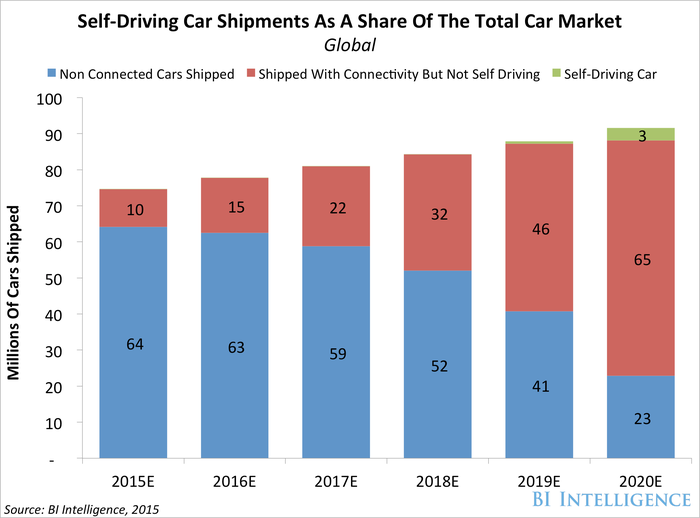 The extra cost is worth it for some farmers, since the self-driving technology allows the tractor to make more precise turns, so it can cover a field in less time with fewer passes. That extra time is valuable for US farmers, who are facing a labor shortage right now as young people from rural areas flock to cities. John Deere says that a driver is still supposed to be behind the wheel of its self-driving tractors, but The Washington Post’s story shares some examples of farmers letting the tractors drive themselves while they do other things.