Sunday, April 29, 2018

Amazon can now deliver packages directly to your car — here's how it works

Amazon can now deliver packages directly to your car if you own a specific model with available features and live in one of the 37 cities the service is available.
Amazon
  • Amazon can now deliver packages directly to the trunk of a car for owners of Volvo and GM models with an active Volvo On Call or OnStar subscription.
  • The service, known as Amazon Key In-Car, is available in 37 cities.
  • It follows the introduction of Amazon Key in-home delivery and continues the trend of Amazon looking for new ways to get packages to customers.

Last year, Amazon wanted to get into your house to deliver packages. Now it wants to deliver directly to the trunk of your car.
The online retailer has launched Amazon Key In-Car, which enables Amazon to deliver packages directly to the trunk of a customer's car.
The service is available to owners of Volvo and GM cars with a 2015 model year or newer who subscribe to Volvo On Call or OnStar. People can check their eligibility on the program's website.
Here's how it works:
  • Download the Amazon Key app and link it to your Volvo On Call or OnStar account.
  • When you shop on Amazon, select in-car delivery at checkout. Give Amazon the address where the car is parked, within a two-block radius. The website stipulates that deliveries "can only be made to a stationary car parked in an open, street-level, and publicly accessible area" — that can include a home or workplace.
  • Amazon provides a four-hour delivery window, usually 11 a.m. to 3 p.m. for two-day delivery or 5 p.m. to 9 p.m. for same-day delivery.
  • The day of delivery, an Amazon driver finds the car via GPS. Before the driver can unlock the car with the app, Amazon verifies "the delivery driver, car, and driver location, and that the package was ordered with in-car delivery."
  • The driver will first try to fit the package in the trunk; if they can't, they'll put it in the cabin. (If the car is unavailable or has moved, Amazon will use the backup delivery option a customer specified.)
  • The app forces the driver to confirm the car is locked before they can leave for their next delivery.
  • Amazon sends a notification to the customer that the package was delivered.
There is no additional cost to use Amazon Key, though the service is limited to Prime subscribers.
"We were really happy with the response to in-home delivery," Peter Larsen, Amazon's head of delivery technology, told The Verge. "What we wanted to do — and it was part of the plan all along — is how we take that beyond the home."
Amazon says "tens of millions of items" are eligible for in-car delivery, as long as they weigh under 50 pounds, fit within size specifications, cost less than $1,300, and don't require a signature upon delivery.
Amazon says it is planning to work with other car manufacturers to roll out the service. Volvo and GM have a two-year contract with Amazon, a source told The Verge.
In-car delivery does not require the installation of extra equipment that Amazon's Key's in-home delivery did, which could make it more attractive to customers. But it does require a subscription to Volvo On Call or OnStar, which could be an added cost for those who don't have either now.

Meet Goya: One of America’s Oldest Hispanic-Owned Food Companies

For more than 80 years, Goya Foods has been one of the leading Hispanic-owned food companies in the country. Its products are rooted in the culinary traditions of Hispanic communities that also introduce new products—from fried plantains found in the frozen food aisle to piƱa colada mix—to non-Latino consumers.
Its secret may be all in the family.
“The ones who are in (the business) are because they want to be inside and we love what we do,” said Frank Unanue, president of Goya Foods, Florida. “I’m third generation and we already have people in the fourth generation working in the business. It gives it the identity and the soul.”
Goya
Goya Foods is a true American success story.
In the early 1930s Unanue’s grandfather, Prudencio Unanue Ortiz, had migrated to Puerto Rico from Spain and eventually arrived in New York. By 1936, he and his wife purchased the Goya name from a sardine-importer‚ reportedly for $1—and were selling authentic Spanish products that included olives, olive oil, and sardines.
As the Hispanic population grew throughout the United States, Goya’s product line and facilities also expanded. Caribbean products such as plantains and pigeon peas were added after World War II with the migration of Puerto Ricans to New York. By the 1960s, black beans, coconut, and guava paste made its way into the product line with the arrival of Cubans and Dominicans.
In 1974, Goya established its headquarters in New Jersey where it remains today.
One challenge for Goya has been to change the perception that Goya is just a Caribbean brand. For instance, there’s a large population of Hispanics on the West Coast that is a different group from the ones “we’ve been selling to all our lives,” Frank Unanue said. “It’s a different culture that is more corn-based, and not rice-based like us on the East Coast. We’ve been growing in the West Coast with a distribution operation in California that started in the ‘90s, but it takes a lot of effort and having the brand identify with the communities.”
Goya
So in 2005, Goya launched a 10-year strategic plan and invested $500 million to reach new consumers and expand its brand.
The investment paid off. By 2016, Goya had opened five new manufacturing and distribution centers in Texas, California, Georgia, and New Jersey.
“As communities grow, we keep growing,” Unanue said from his office in Miami, the largest market of Goya products in the state of Florida. “They are very proud of what the company has accomplished and identify with Goya because we are a Hispanic company.”

Floribbean Flavors

Snapper Ceviche with Chiles and Herbs
Blackened Tilapia with Chayote-Mango Pasta Salad
Coconut Flan
The company’s identity continues to grow along with the Hispanic community, which is estimated to reach 119 million people by 2060 and make up nearly 30 percent of the nation’s population, according to the U.S. Census Bureau.
What started with just a handful of products has grown to include over 2,500 that range from condiments to beverages, canned meats and even kosher foods from Spain, the Caribbean, Mexico, Central and South America. Goya also employs over 4,000 people and boasts 26 factories throughout the U.S., Puerto Rico, Dominican Republic, and Spain.
Today, consumers know Goya for its best-seller: beans. But even sales of this pantry staple vary according to the market. For instance, Colombians prefer small red beans while Puerto Ricans cook with pigeon peas and Mexicans use refried black beans. “The number one bean in the Northeast may not be number one in Florida. They unify us but separate us by the color of the beans,” Unanue said.
Goya
Goya is committed to staying true to the Hispanic palate while also growing its line of products that cross over into the mainstream market with olive oils and spices. The consumer research firm Packaged Facts estimates that the Hispanic food market is a part of American food culture for at least a third of the U.S. population, if not more. The firm estimates that sales in the Hispanic foods market in the U.S. will exceed $21 billion in 2020.
Meanwhile, the Hispanic market is following healthier food trends with low-sodium and organic options. “Our low-sodium beans do really well,” Unanue added.
Since the day Prudencio Unanue started the company, quality at the best price has been one of Goya’s guarantees and is even part of its slogan: “If it’s Goya, it has to be good.”
With annual sales at $1.4 billion, according to a company statement, Goya remains a privately held, multi-generational company.
That is just the way Frank Unanue sees the future.
“My goal is for it to stay within the family for generations to come.”

Saturday, April 28, 2018

Ahold Delhaize Partners Abroad for Artificial-Intelligence Research

04/27/2018
Ahold Delhaize Partners Abroad for Artificial-Intelligence Research
International grocery company Ahold Delhaize is working to increase its focus on the development of artificial intelligence (AI) technology, joining the Innovation Center for Artificial Intelligence (ICAI) to open its first laboratory.
ICAI, which officially launched at Amsterdam Science Park in the Netherlands, is focused on joint development of technology through industry labs with the business sector, government and knowledge institutes. In the AIRLab, seven Ph.D.’s will conduct research into socially responsible algorithms that can be used to make recommendations to consumers and into transparent AI technology for managing goods flows. The research will take place at Ahold’s Albert Heijn banner and its bol.com ecommerce arm.
Additionally, AIRLab will focus on talent-development tracks.
“Artificial intelligence offers countless possibilities for the retail industry, the consumer and society at large,” said Frans Muller, deputy CEO of the Zaandam, Netherlands-based retail company. “With this partnership, we want to further develop our ongoing initiatives and learn how AI can be used to better serve the interests of our customers.”
Muller stressed that insights learned in the new lab can be applied to not only Ahold Delhaize’s European brands, but also its ones in the United States: Food Lion, Hannaford, Giant/Martin’s, Giant and Stop & Shop banners, as well as online grocer Peapod.
“For instance, we will look at how to further optimize Albert Heijn’s supply chain by, for example, improving the availability of goods by taking into account local weather conditions,” he added. “Also, we will investigate ways to make the assortment of bol.com even more accessible to customers.”
The Netherlands has a long tradition in AI education at all levels of higher education. ICAI’s mission is to keep the Netherlands striving for innovation through AI, especially by “attracting, managing and retaining top talent,” as well as by linking that talent with the business sector, De Rijke asserted.
“AI will influence every sector of society,” he said. “The partnership with Ahold Delhaize is of major importance because with it we are making a serious investment in the development of AI talent and AI technology outside of the traditional technology sector.”

1-on-1 With IGA CEO John Ross

Exec shares candid views on why ‘food retailing is a great place to be’


major observations header
John Ross is CEO of IGA, the largest group of independent grocery retailers in the world. Prior to joining IGA last fall, Ross was president of Inmar Promotion Network a global software, data services, analytics and strategic consulting provider for retailers and manufacturers.
Meg Major: Congrats on leading IGA into the next era. Let’s get started by discussing the radically changing marketplace, which has certainly made food retailing more complex. What are your top priorities on this note as it relates to IGA members? 
John Ross: We’ve been looking at our mission statement and the services we provide today versus envisioning what we should do for the future—which is generally what happens when you get a new boss. But it’s clear that we have to step up the range of services we provide, because as the retail business is changing and becoming more complex—and much more creative and interesting, by the way—we need to help our members evolve with new skills that all grocers need to have today, such as becoming better restaurateurs and better nutrition experts, and of course becoming more digitally savvy in e-commerce. On all fronts, I’m bullish, not just because I’m with IGA, or because I think independents are in a cool business. I’m bullish because the very nature of what we’re doing hits on all of the coolest parts of the future of the business.
MM: Please discuss how your background has prepared you for your role, and what appealed to you most about it?
JR: I started off in retail, and I’ve been an operator, a merchant and a marketer. I’ve also been in traditional e-commerce, private label and national brand launches, and worked on the service side for advertising agencies and marketing companies, and then with Inmar—a full-blown data and technology company. I’ve done so many different things in the retail ecosystem, and when we sold Inmar last May, Mark [Batenic, IGA’s president/CEO since 2006] and I started talking about his retirement. I started getting excited about IGA’s independents, because some of the data and the trends we’re seeing intersect directly with what I envision for the next generation of grocery—the nature of the store, the widening of its value proposition, the switching to experiential retailing—all of which is way more fun than commodity retailing.
MM: As an advocate of the role data analytics plays in marketing and retailing, as well as a champion of technology-empowered shoppers, what do you feel is most significant for independents in this domain?
JR: Anybody who’s a good operator is already a data and analytics person who runs their business by movement, shrink reports and gross margins. They’re already good numbers people. But what makes data and analytics new, fresh and cool isn’t that it’s some scary technology; what makes big data interesting is that the machine starts doing some of the work for you, and that’s not what indies have seen so far. Their take on data analytics has been more reports, albeit not prescriptive. No operator, big or small, has time to sit down and analyze a spreadsheet. They need to know what’s broken, and what are the top two things they can do to change it? So our next task is to inform them about how to convert that data—not into a report card, but a benchmark, with a set of recommendations that say: “If you want to move the metric up, try this.” And it’s not scary. And when done right, it becomes a new tool that doesn’t require sitting in your office looking at spreadsheets, but instead taking a set of recommendations and implementing them, and then watching to see if they made a movement in your margin of your sales.
MM: Switching gears, what advice would you give to your 20-year-old self?
JR: At 20, I was still in college, and was a commissioned salesperson working retail. I was also probably playing the piano on Bourbon Street at night to put myself through school. And that kid wanted a career in anything but retail. I did, in fact, quit my retail job and left to try something different. I ended up going back into merchandising and I’ve never left.
You said something very smart at the beginning our interview, Meg, about how we as industry do a generally terrible job with young people in retail by not courting them. Had I not gotten the opportunity to go back and work for an independent, and have one of the senior merchants take me under his wing and show me how cool retail really is, I would never have done what I did. So, my advice to my 20-year-old self would be, “You’re already in an exciting business. You’re in a business that will give you leadership opportunities early, and you’re in a business that will allow you to experiment, and test, and fail, and learn, and grow in a way that you couldn’t do in a big corporate company. Food retailing is a great place to be.”  
Lightning Round 
What is your most prized possession?
Three-part answer: My father’s old Hamilton watch, my family (although I realize they’re not possessions) and my ’51 Corvette—black with silver coves and red interior—which is pretty cool, too.
How about your favorite leisure activity?
I like driving cars, fast.
What words or phrases do you most overuse?
My latest one is “bespoke.” “Retailers don't need a homogenous answer—they need a bespoke solution.” It sounds so haughty, but loosely defined means made to order.


Food Lion to Buy 4 South Carolina Bi-Lo Stores


Food Lion has entered into a transaction to acquire four South Carolina Bi-Lo leases from Southeastern Grocers.
The stores, which are expected to do business under the Bi-Lo banner until the deal closes in late May, are located in Myrtle Beach (1241 38th Ave. N.), Surfside Beach (1610 Hwy. 17 S.), Florence (500 Pamlico Hwy.) and Columbia (9003 Two Notch Rd).
Food Lion did not disclose a price, but according to documents filed in the federal bankruptcy court—which Southeastern petitioned to approve the sale—Food Lion is acquiring the leases, fixtures and equipment at each of the stores for $10 apiece.
Southeastern filed for Chapter 11 protection in March and said it would close 94 stores, including 21 Bi-Lo stores and 19 in South Carolina.
“We are so excited to add these four new locations to our network of nearly 70 stores serving the greater Myrtle Beach, Florence and Columbia areas,” Food Lion President Meg Ham said in a release. “We are part of the fabric of this community. We've been here in these towns and cities nourishing our neighbors and customers for nearly 40 years. With the addition of these four new stores, we have an even greater opportunity to serve more customers with fresh, quality products at affordable prices every day with the caring, friendly service they expect from Food Lion.”
In connection with the deal, Food Lion said it would donate 60,000 meals to the Lowcountry Food Bank in North Charleston, S.C., and Harvest Hope Food Bank in Columbia, S.C. Food Lion will also ensure each new store will be assigned a feeding agency partner to receive weekly food donations through the company's food rescue program.

Friday, April 27, 2018

Alibaba launches blockchain pilot to fight food fraud

Alibaba Group is embarking on a pilot project to increase supply chain transparency for Australian and New Zealand products that are sold on its Tmall e-commerce marketplace in China.
Launching in Auckland on Thursday, the Food Trust Framework uses blockchain technology and product tagging with unique QR codes to give consumers confidence they are buying authentic products online.
Blackmores and Fonterra are the first companies to trial the framework, with Blackmores shipping Odorless Fish Oil, while Fonterra is shipping Anchor dairy products.
If the pilot is successful, it could form the basis of a global supply chain model to authenticate, verify, record and provide ongoing reporting of the transfer of ownership and provision of products and goods across all of Alibaba’s e-commerce markets.
Speaking at the launch, Alibaba Group’s general manager of Tmall Import & Export, Alvin Liu, said the framework is a response to the growing complexity of global supply chains, making it difficult for 40 per cent of food companies, for instance, to detect food fraud with current methods, according to PwC.
“In response, we have created a coordinated, world-leading and robust framework that involves stakeholders from across the supply chain to improve visibility and enhance the confidence of both end consumers and merchants,” Liu said.
Alibaba announced last year the engagement of PwC in Australia, New Zealand and China as an advisor on the set-up of a framework to protect product authenticity and provide a safe and trusted marketplace for consumers.
The e-commerce also signed a Memorandum of Understanding last year to partner with Blackmores, Australia Post, Fonterra and New Zealand Post on the pilot project.
Blackmores CEO Richard Henfrey said traceability in supply chains is just an extension of hte quality checks that products undergo before they hit the shelves.
“Blackmores goes to extraordinary lengths to have visibility over our supply chain and each of our products passes 30 tests and checks before it is released for sale. So we’re exploring ways to leverage the technology and data that can provide our consumers with assurance that their trust in our products is well-placed,” he said.
“Our commitment to quality doesn’t end in our distribution centre and we need to give consumers confidence in the products they purchase on e-commerce platforms.”
Australia Post’s group chief operating officer Bob Black said the postal service is committed to investing in infrastructure to ensure the delivery of genuine products to customers.
“We safeguard the transport of high-quality, genuine products to our customers, which is why we’re so committed to developing the Food Trust Framework. Through our international logistics network, Australia Post delivers to more than 190 countries around the world. We’re continuously investing in technology and infrastructure, and building strong partnerships to guarantee our global ecosystem is world-class to exceed customer demands.”

British retailer M&S launches beef traceability campaign

British retail giant Marks and Spencer has announced a new campaign that “shines a spotlight” on its beef traceability standards.
Beef
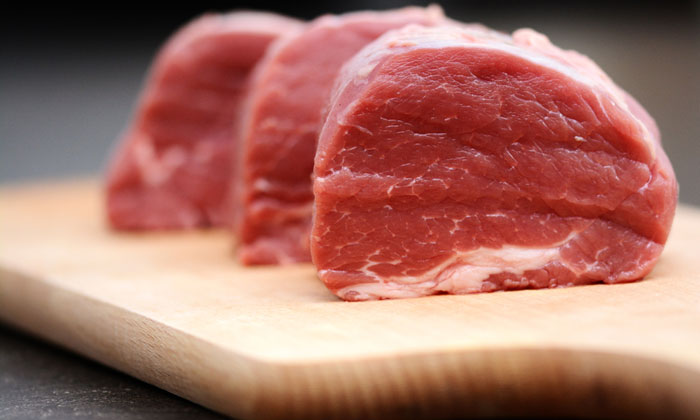
STANDARDS: M&S ensures their beef comes from where they say it does through DNA testing
M&S claims to be the only national retailer that can trace every piece of beef it sells all the way back to every farm and animal from which it was sourced.
The “We trace it, so you can trust it” campaign is backed by DNA sampling provided by Dublin-based tech company Identigen. Thousands of tests are carried out every year to check that M&S’ standards are being followed.
The ads carry a Union Jack flag highlighting to customers that every piece of M&S beef is British.
Webinar: Using electronic laboratory notebooks in the food and beverage industry
Electronic Laboratory Notebooks (ELNs) have been used for a long time in the Pharma and Biotech industries. While certain aspects may be industry specific, the need to document and share information is clearly applicable also within Food and Beverage (F&B).This webinar discussed the key aspects of how the F&B lab can benefit from an ELN, with examples of successful customer deployments. You will also learn how BIOVIA Notebook works. This easy to use, easy to scale solution helps labs to improve documentation and share information between sites globally.
Sharry Cramond, Food Marketing Director at M&S, said: “Since joining M&S I’ve been amazed at the stories behind our products. Our people go to extraordinary lengths to source the very best ingredients and products and we are not shy of using cutting-edge technology to guarantee our provenance. Our beef campaign is an important first step in shining a spotlight on our unrivalled food standards – because trusting the food we eat matters to our customers.”
An interactive supply chain map showing every single farm that supplies M&S with beef will launch next month. 
Luke Williamson, Executive Creative Director at M&S ad agency Grey London, said: “Provenance is such a powerful story for M&S. We’re excited to be launching this fresh campaign, it’s a bold message delivered in an integrated way that will leave customers in no doubt over where M&S beef comes from.”
M&S uses DNA sampling to trace its beef back to every farm and animal. A sample is taken from every animal from every farm that supplies M&S and its suppliers. Thousands of tests are carried out every year on products taken at random from M&S stores and warehouses. The tests check that beef is moving through the supply chain – from farm, to abattoir to processor and to store – correctly and that M&S standards are being followed. 
Steve McLean, Head of Agriculture at Marks & Spencer, said: “We’re passionate about supporting British farming and working with our suppliers to invest in new technology and the best systems available. That gives us better traceability than anyone else in the market and, when it comes to beef, it means we know where every single animal was reared, how it was reared and how the beef moved through our supply chain.”