The farm that runs without sun, soil or water

Photos: Farming without sun, soil or water
AeroFarms hopes to transform how food is produced with an approach to farming which involves gathering vast amounts of data to create algorithms to help them optimize the growing method for each variety.
Hide Caption
5 of 8

Photos: Farming without sun, soil or water
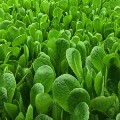
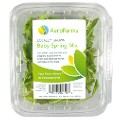
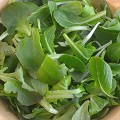
So far AeroFarms have grown over 250 varieties of leafy greens and herbs including arugula, watercress, basil and romaine lettuce, pictured.
Hide Caption
6 of 8

Photos: Farming without sun, soil or water
Urban farming for local markets is part of the philosophy, and the company says they will only sell their greens to restaurants, shops and markets nearby.
Hide Caption
7 of 8

Photos: Farming without sun, soil or water
The leaves cost about 20% more than other greens, which is about the same premium as organic produce.
Hide Caption
8 of 8

Photos: Farming without sun, soil or water
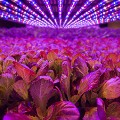
A massive indoor vertical farm is about to open in the US and it grows baby leaves and herbs using a method which requires no sunlight or soil and next to no water.
Hide Caption
1 of 8

Photos: Farming without sun, soil or water
Run by urban farming company AeroFarms, the 69,000-square-foot farm will produce leafy greens and herbs grown without any pesticides or herbicides for the local community.
Hide Caption
2 of 8

Photos: Farming without sun, soil or water
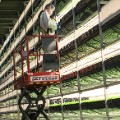
Light, air, humidity and temperature inside the farm are all tightly controlled and the method makes it possible to achieve between 22 and 30 yields a year, compared to two or three at a conventional outdoor farm.
Hide Caption
3 of 8

Photos: Farming without sun, soil or water
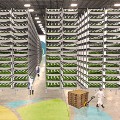
Built in a converted steel mill in Newark, New Jersey, it is the largest indoor vertical farm in terms of production capacity, which is estimated at 2 million pounds of greens a year, according to the company. This rendering shows what the facilities will look like when fully operational.
Hide Caption
4 of 8
Photos: Farming without sun, soil or water
AeroFarms hopes to transform how food is produced with an approach to farming which involves gathering vast amounts of data to create algorithms to help them optimize the growing method for each variety.
Hide Caption
5 of 8
Photos: Farming without sun, soil or water
So far AeroFarms have grown over 250 varieties of leafy greens and herbs including arugula, watercress, basil and romaine lettuce, pictured.
Hide Caption
6 of 8
Photos: Farming without sun, soil or water
Urban farming for local markets is part of the philosophy, and the company says they will only sell their greens to restaurants, shops and markets nearby.
Hide Caption
7 of 8
Photos: Farming without sun, soil or water
The leaves cost about 20% more than other greens, which is about the same premium as organic produce.
Hide Caption
8 of 8
Photos: Farming without sun, soil or water
A massive indoor vertical farm is about to open in the US and it grows baby leaves and herbs using a method which requires no sunlight or soil and next to no water.
Hide Caption
1 of 8
Photos: Farming without sun, soil or water
Run by urban farming company AeroFarms, the 69,000-square-foot farm will produce leafy greens and herbs grown without any pesticides or herbicides for the local community.
Hide Caption
2 of 8
Photos: Farming without sun, soil or water
Light, air, humidity and temperature inside the farm are all tightly controlled and the method makes it possible to achieve between 22 and 30 yields a year, compared to two or three at a conventional outdoor farm.
Hide Caption
3 of 8
Photos: Farming without sun, soil or water
Built in a converted steel mill in Newark, New Jersey, it is the largest indoor vertical farm in terms of production capacity, which is estimated at 2 million pounds of greens a year, according to the company. This rendering shows what the facilities will look like when fully operational.
Hide Caption
4 of 8


Story highlights
- AeroFarms grow crops without soil, sunlight and nearly no water
- Upcoming site will produce 2 million pounds of leafy greens a year
(CNN)What do you get if you cross a tech entrepreneur with a farmer?
The world's largest, and possibly most sophisticated indoor farm -- where greens grow without sun, soil or water.
Well, almost no water. AeroFarms, the company behind the venture, say they will use 95% less water than a conventional outdoor farm.
Set to open in September in Newark, New Jersey, the 69,000-square-foot farm will be hosted in a converted steel factory. It combines a technique called "aeroponics" - like hydroponics, but with air instead of water - with rigorous data collection, which will help these modern farmers figure out optimal conditions for growth.
The goal? To produce tall, handsome, tasty baby greens and herbs such as kale, watercress and basil.
Fighting a looming food crisis
This will be the largest farm of its kind in the world in terms of production capacity: 2 million pounds of greens a year, according to Aerofarms founder David Rosenberg.
But the company's ambitions go beyond selling vast amounts of veg. They also hope to provide an answer to a looming food crisis.
The world's population will hit 8.5 billion by 2030, according to UN estimates, meaning many more mouths to feed.
Most people now live in cities, with 54% of the world's population already living in urban areas.
Rosenberg says innovation is urgently needed to feed everyone, and urban farming might be part of the solution.
"We are building this company to be wildly impactful. Not just to build a few farms, but to change the world."
How it works
Inside the farm, there are no natural seasons, nights or days. Light, air humidity and temperature are all tightly controlled.
As soon as one harvest is in, another begins -- each plant is expected to yield between 22 and 30 harvests a year.
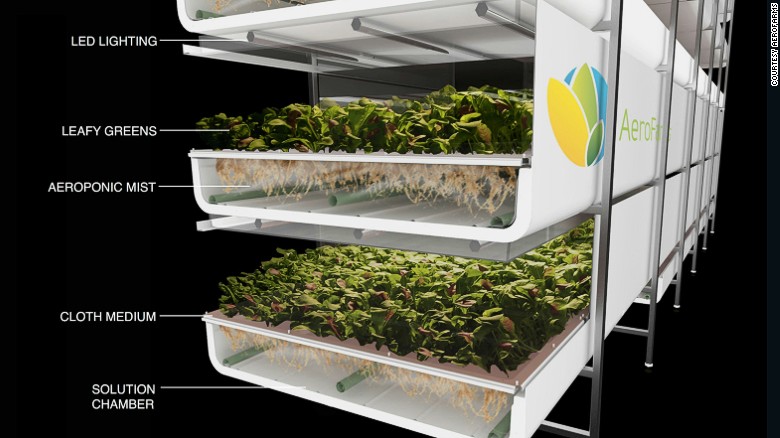
Long rows of LED tubes shed light at the exact wavelength each plant needs to thrive. Instead of soil, the plants are grown on a cloth made from recycled materials, and their roots are misted with a solution of nutrients.
The company says their method is superior to more commonly used indoor farming techniques like aquaponics and hydroponics, which require much more water, and that the plants taste the same, or even better, than their conventionally grown counterparts.
Aeroponic farming techniques have been used before. NASA astronauts use it to grow food at the International Space Station, for example, and home-grow DIY kits can be ordered from a number of companies online.
Farming with algorithms
To make sure the greens have everything they need, the company collects data from the plants to create algorithms for growth.
"We built our own software which take images of leaves to understand height, width, length, stem ratio, curving, color, spotting and tearing," says Rosenberg.
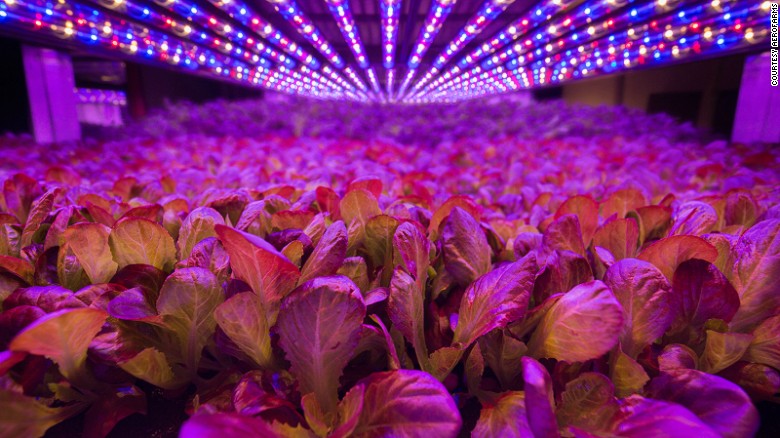
The light is altered to fit each plant
The long rows of so-called growing towers are more like computers than farms, with sensors everywhere observing the process. Every now and then, one of the farmers does an inspection to ensure all is well, explains co-founder Marc Oshima.
"We think of ourselves as plant whisperers, listening and observing everything we can do to optimize our plants. Our growing approach is really leading the way, marrying biology, engineering, and data science."
Their farms are partly run on renewables such as solar power, but what really gets the carbon footprint down is bypassing extensive transportation of the produce by only selling the greens to local markets, shops and restaurants.
Staying local is part of the philosophy. "We have had some request to go nationwide. It's tempting, but seems counter to our mission of locally produced food," Rosenberg says.
Beyond organic?
In addition to ultra-low water usage, not using any soil further reduces the environmental impact.
The crops are currently sold at a 20% premium, similar to organic and locally produced food, but because no soil is involved, they cannot get an organic certification, although some retailers consider them to be beyond organic, Rosenberg explains.
The closed-loop system uses only non-GMO seeds and no pesticides, herbicides or fungicides, and so it reduces the harmful agricultural run-off into the environment, says Rosenberg.
"I think we are going to have a bigger and bigger impact on leafy greens and other crops in the future. And the future is going to be very different, in large part because of data."

No comments:
Post a Comment